원자력공학과, ‘원자력 안전규제라운드테이블’ 개최

대학소식 2026년 05월 12일 화요일

UNIST-HD현대중공업, ‘AX교육연구센터’ 설립… “AI로 조선 산업 체질 바꾼다”

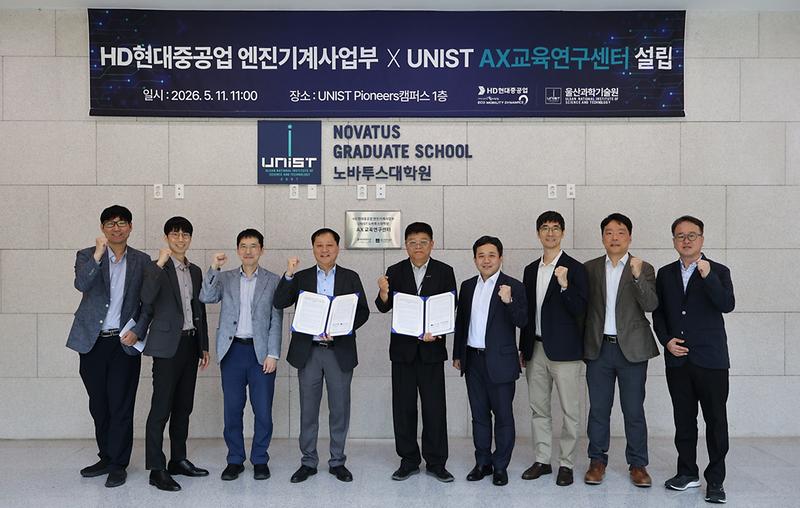
UNIST가 HD현대중공업과 함께 조선 산업 현장의 AX(AI 전환)를 추진할 산학협력 거점을 세운다. 양 기관은 11일(월) 파이오니어(Pioneers) 캠퍼스에서 ‘HD현대중공업×UNIST AX교육연구센터’ 설립 협약을 체결하고 현판식을 열었다. 이날 행사에는 UNIST 안현실 연구부총장, 김남훈 Pioneers 캠퍼스단장, 김성일 산업공학과장, 김영대 교수와 HD현대중공업 류영석 전무, 김국선 책임, 이희성 책임 등이 참석했다. AX교육연구센터는 HD현대중공업 생산 라인의 현안을 UNIST AI 교육·연구 역량과 이어준다. 교육 과정에서 과제를 찾아내고, 이를 공동연구와 기술자문, 제조 공정 실증으로 확장하는 체계다. 조선 산업에서 실제 작동할 AI 기술을 발굴하고 현장 적용성을 검증하는 실행 기반인 셈이다. 이번 협력은 지난해 9월 HD현대중공업 엔진기계시스템기획부와 UNIST가 AI 기반 산학협력 방안을 논의하면서 시작됐다. 양 기관은 조선 산업의 경쟁력을 높이려면 현장 중심의 AX 전환이 필요하다고 보고, 임직원 교육과 기업 요구에 맞춘 공동연구를 병행하기로 했다. 제조 공정에 적용 가능한 기술을 찾아내고 이를 생산 현장으로 확산시키는 것이 목표다. 센터는 특정 학과나 개별 연구실 단위가 아닌 UNIST 대학 차원의 산학협력 체계로 운영된다. 교수진이 꾸준히 참여할 수 있는 구조를 만들면, HD현대중공업 수요에 맞춘 연구 주제를 안정적으로 발굴·수행한다. 양 기관은 HD현대중공업 임직원을 대상으로 UNIST의 재직자 AI 교육 프로그램인 ‘노바투스아카데미아’를 운영한다. 이 과정에서 조선·엔진·기계 시스템 분야의 AI 활용 주제를 찾아내고, 이를 산학 공동연구와 제조 공정 적용으로 연결한다. 교육은 산업현장 문제 해결형으로 설계해, 현안 분석부터 기술 검증까지 이어지도록 한다. UNIST는 노바투스대학원 석사과정, AI최고경영자과정 등 기존 교육과정과의 연계도 추진한다. 후속 공동 프로젝트가 이어질 경우 장학 지원, 기업 현안에 대한 상시 기술자문, 사내 AI 교육을 위한 UNIST 교수진 중심 강사진 지원망도 마련한다. 안현실 연구부총장은 “이번 센터 설립은 HD현대중공업 산업현장의 실제 문제를 AI 기술로 해결하기 위한 실행형 산학협력 모델”이라며 “UNIST의 AI 연구 역량과 HD현대중공업의 현장 경험을 결합해 조선 산업의 AX 전환 속도를 높이겠다”고 말했다. HD현대중공업 관계자는 “UNIST와의 협력을 통해 현장에서 쓸 수 있는 AI 기술을 개발하고 임직원의 AI 역량을 강화해 기업 경쟁력을 높이겠다”며 “지속적인 산학협력으로 조선 산업의 AX 전환을 선도하겠다”고 밝혔다. UNIST는 노바투스아카데미아를 통해 동남권 산업현장형 AI 인재를 양성해 왔다. 이번 AX교육연구센터 출범을 계기로 조선 산업과 맞닿은 AI 교육·연구 협력을 확대한다.

원자력공학과, ‘원자력 안전규제라운드테이블’ 개최

대학소식 2026년 05월 07일 목요일

UNIST ‘AI최고경영자과정 2기’ 입학식 개최… “AI 시대 기업 전략 리더 키운다”

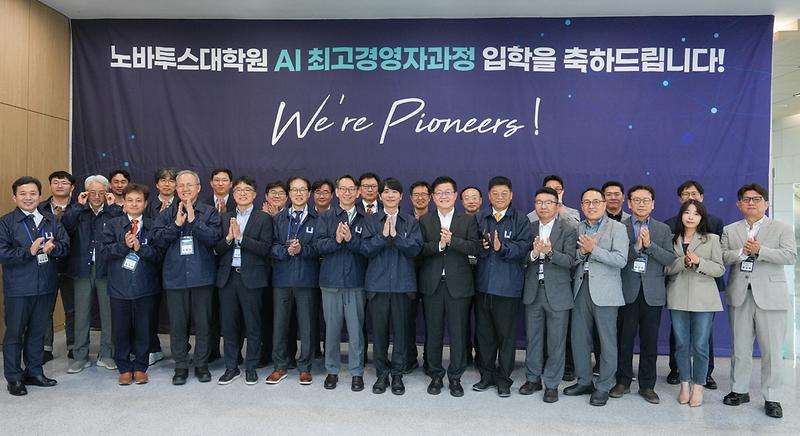
UNIST가 동남권 기업과 기관 최고경영자를 대상으로 AI 전략 교육을 본격 운영한다. UNIST 지역산업혁신팀은 6일(수) 오후 4시 Pioneers 캠퍼스에서 ‘노바투스대학원 AI최고경영자과정 2기’ 입학식을 개최했다. 이번 과정에는 울산·부산·경남 지역 기업과 기관 최고경영자 30여 명이 참여한다. 입학식에는 박종래 총장, 안현실 연구부총장, 김남훈 노바투스대학원장 등 UNIST 주요 관계자를 비롯해 김명주 경상남도 경제부지사 등 지자체 관계자가 함께했다. 지역 산업 현장의 의사결정권자들이 한자리에 모여 AI 활용 역량 강화와 AX 전환을 위한 협력 기반을 논의했다. 행사는 교육과정 소개와 환영사, 축사, 특강, 기념촬영 순으로 진행됐다. 박종래 총장은 환영사를 통해 입학생들을 격려했으며, 김명주 경제부지사는 축사를 전했다. 김남훈 원장은 과정의 운영 방향과 주요 커리큘럼을 설명했다. 개강 특강은 이세돌 UNIST 특임교수가 맡았다. 이 교수는 AI 시대의 변화와 인간의 판단, 기업 리더의 역할을 주제로 강연했다. 이어 안현실 연구부총장이 ‘AI+新지정학 시대 한국의 선택’을 주제로 첫 강의를 진행하며 정규 교육을 시작했다. AI최고경영자과정은 기업·기관 최고경영자가 인공지능 핵심 개념과 산업 적용 사례를 이해하고, 이를 경영 의사결정과 기업 전략에 활용할 수 있도록 설계된 교육 프로그램이다. AI를 사업 혁신, 조직 운영, 신사업 발굴, 전략 수립에 연결하는 데 초점을 맞췄다. 이번 2기 과정은 동남권 산업 현장 수요를 반영해 교육 범위를 확대했다. UNIST는 울산·부산·경남의 제조업, 소재·부품·장비, 에너지 등 지역 주력 산업 특성을 고려한 AI·AX 전략 교육을 제공한다. 교육과정은 총 12회 정규 강의와 워크숍, 통합 네트워킹, 해외 산업 혁신 사례 벤치마킹 등으로 구성된다. 강의는 AI 기술 이해를 비롯해 기술경영, 산업 적용 전략, 사업화, 혁신 사례 등 최고경영자의 전략적 의사결정에 필요한 내용 중심으로 운영된다. 강사진에는 AI 전문가인 UNIST 산업혁신 분야 교수진과 특임교수들이 참여한다. 배성철 교학부총장, 안현실 연구부총장, 심재영 인공지능대학원장 등 다양한 분야의 전문가들이 AI 기술과 산업 혁신 전략을 주제로 강의를 이어갈 예정이다. UNIST는 교육 이후에도 울산·부산·경남 통합 원우회를 운영해 최고경영자 네트워크를 지속적으로 지원한다. 지역 기업 간 AI 활용 사례를 공유하고, 산학협력과 공동 프로젝트, 기업 간 협업으로 이어질 수 있는 기반을 강화하기 위해서다. 박종래 총장은 “AI 기술은 이제 기업 경쟁력을 좌우하는 핵심 요소가 됐다”며 “이번 AI최고경영자과정을 통해 동남권 기업과 기관 경영진이 AI 기반 전략 역량을 강화하고, 지역 산업의 AX 전환을 이끄는 리더로 성장하길 기대한다”고 말했다. UNIST는 AI 교육과 산학협력을 기반으로 산업 현장 AX 전환을 지원해 왔다. 이번 AI최고경영자과정 2기 운영을 계기로 동남권 산업 간 협력 네트워크를 확대하고, AI 기반 산업 혁신 생태계를 강화해 나갈 계획이다.

원자력공학과, ‘원자력 안전규제라운드테이블’ 개최

대학소식 2026년 04월 01일 수요일

UNIST-근로복지공단, 공공데이터에 AI 입힌다

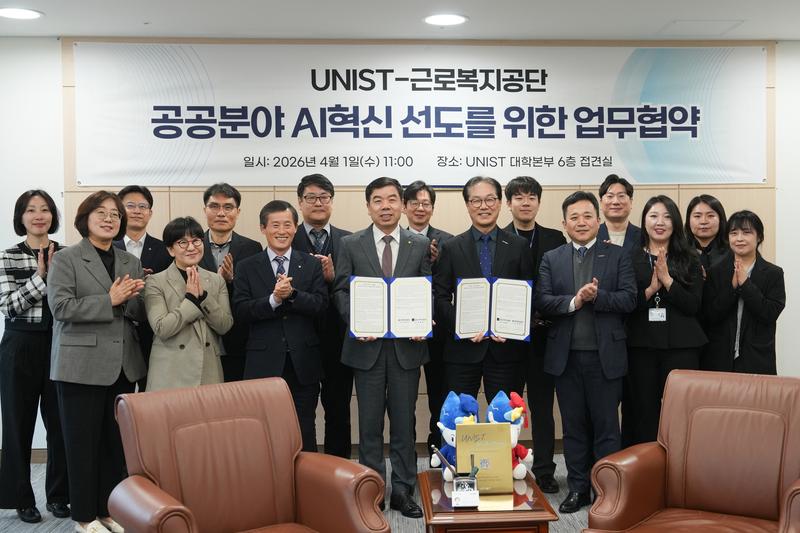
UNIST와 근로복지공단이 공공 데이터에 AI를 더해 정책 고도화와 서비스 개선에 힘을 모은다. UNIST Pioneers 캠퍼스는 1일(수) 대학본부 대회의실에서 근로복지공단과 ‘공공분야 AI혁신 선도를 위한 업무협약(MOU)’을 체결했다. 협약식에는 UNIST 박종래 총장과 근로복지공단 박종길 이사장을 비롯한 두 기관 주요 관계자들이 참석했다. 이번 협약은 AI 기술 발전과 디지털 전환 흐름에 맞춰 공공분야 정책과 사업 운영의 정밀도를 높이고, 연구 성과를 실제 서비스 개선으로 연결하기 위해 마련됐다. 공공기관이 보유한 현장 데이터와 UNIST의 AI 연구·교육 역량을 결합해 국민이 체감할 수 있는 변화를 만들겠다는 취지다. 근로복지공단은 UNIST 노바투스아카데미아 AI 실무자과정 8기에 참여해 프로젝트 기반 학습(PBL) 방식으로 ‘중소기업퇴직연금기금제도 가입대상 예측 모델’을 수행하고 최우수상을 수상했다. 이번 협약을 계기로 양 기관은 예측 모델의 현장 적용을 위한 고도화를 추진한다. 또 UNIST는 산업 분야에서 축적한 노바투스아카데미아 성과를 공공부문으로 넓혀 현장 활용 사례를 확대해 나간다. 정책·사업 현안을 풀기 위한 공동연구도 진행한다. 공단 임직원 대상 전문교육과 맞춤형 과정을 운영하고, 공공분야 AI 전문인력 양성 프로그램을 함께 꾸린다. 이와 함께 △데이터 분석 △의사결정 지원 △공공 실증 △기술이전 △사업화 모델 발굴 △우수 사례 확산도 협약 범위에 담았다. UNIST는 공공부문에 바로 적용할 수 있는 연구 과제를 발굴하고, 교육과 학위과정을 통해 실무형 인재를 키운다. 연구 결과가 현장에서 쓰일 수 있도록 실증부터 사업화 검토까지 맡는다. 근로복지공단은 정책 집행 과정에서 축적한 현장 경험과 데이터를 바탕으로 수요 중심 과제를 제시하고, 행정 현장에 필요한 AI 적용 방안을 함께 구체화한다. 양측은 이번 협약을 통해 공공분야 정책과 사업 운영의 디지털 전환 속도를 높이고, 공공부문 전반으로 넓혀갈 수 있는 AI 사례를 축적해 나갈 계획이다. 공공서비스의 효율과 정확도를 끌어올리고 공공 AI 생태계 확산에도 기여할 것으로 기대된다. 박종래 UNIST 총장과 박종길 근로복지공단 이사장이 업무협약을 체결하고 기념 촬영하고 있다. 박종래 UNIST 총장은 “AI는 산업 현장뿐만 아니라 공공서비스 혁신의 중요한 동력으로 자리 잡고 있다”며 “근로복지공단과 함께 공공분야에 적합한 AI 모델을 발굴하고 국민이 체감할 수 있는 변화로 이어지도록 하겠다”고 말했다. 박종길 근로복지공단 이사장은 “UNIST의 AI 연구·교육 역량과 공단의 정책·사업 경험이 결합하면 공공서비스의 효율과 품질을 높일 수 있다”며 “AI 기반 공공 혁신이 실질적인 성과로 이어지도록 협업을 넓혀가겠다”고 전했다.

원자력공학과, ‘원자력 안전규제라운드테이블’ 개최

기고 2026년 03월 31일 화요일

[안현실칼럼]창조성 높은 인재도시 울산을 꿈꾼다면

인공지능(AI) 시대 인간은 어떤 창조성(creativity)을 추구해야 할까. 마거릿 보든(Margaret A. Boden)은 창조성을 새롭고(new) 놀랍고(surprising) 가치있는(valuable) 아이디어 생산능력으로 정의했다. 보든은 창조성(creativity)을 세 범주로 나누었다. 익숙한 아이디어들을 이전에 없던 방식으로 결합하는 ‘조합형 창조성(combinatorial creativity)’, 기존의 개념 공간에서 아직 발견하지 못한 가능성을 찾아내는 ‘탐색형 창조성(exploratory creativity)’, 그리고 전에는 가능하지 않았던 아이디어를 창출할 새로운 개념 공간의 문을 여는 ‘변혁형 창조성(transformational creativity)’이 그것이다. 창조성이 더 이상 인간의 전유물이 아닌 AI 시대다. 인간과 AI는 창조성에서 어떤 분업으로 갈 것인가. AI가 조합형과 탐색형에서 강점을 갖는다면 인간이 잘할 수 있거나 노력해야 할 창조성은 짐작하는 대로다. 변혁형이다. 우리는 그럴 준비가 되어 있는가. 이건희 전 삼성전자 회장은 2002년 인재전략 워크숍에서 이렇게 말한 적이 있다. “200~300년 전에는 10만~20만 명이 군주를 먹여 살렸지만, 21세기에는 탁월한 한 명의 천재가 10만~20만 명을 먹여 살린다.” AI 시대에 맞게 번역하면 그 천재는 변혁형 창조성의 인재다. 문제는 이런 천재를 어떻게 발굴하고 기를 것인가다. “극히 높은 성과를 올린 인재는 어릴 때부터 그 편린(片鱗)을 보여주는 경우가 많다.” 천재에 관한 연구들이 확인해 준다. 미국 등에서 조기 월반제도를 도입한 과학적 근거도 여기서 나왔다. 하지만 어릴 때 우수한 재능을 가진 아이가 끝내 꽃을 피우지 못한 경우도 있다. 특별한 교육의 필요성이 등장하는 이유다. 특히 어릴 때 탁월한 재능이 있는데도 저소득층 등 환경적 이유로 창조성 발현의 기회를 얻지 못한다면, 개인은 물론 국가, 나아가 인류의 손실이다. 천부적 재능의 발굴도 중요하지만, 그 재능을 살려줄 교육은 그래서 더 중요하다. 창조성 높은 인재의 특성 연구는 차고 넘친다. 이들은 호기심이 많고 새로운 것을 좋아한다. 세상을 바꾼 변혁형 혁신가나 가장 성공한 발명가의 특성 연구도 마찬가지다. 기존의 전제나 가정을 의심하고 지금까지 없던 문제에 도전한다. 이런 특성은 쉽게 모방할 수 없지만, 창조성 높은 사람의 행동 특성을 잘 활용하면 누구든 혁신 잠재력을 키우고 소질을 개발하는데 큰 도움이 될 것이다. 교육과 문화를 ‘혁신친화적’으로 바꿀 수 있다. 창조성과 관련한 또 하나의 연구는 동기에 관한 것이다. 동기는 금전보상, 승인욕구 등 외적동기와 자기 내부에서 분출되는 내적동기로 나뉜다. 연구에 따르면 외적동기는 한계가 있다. 보다 높은 창조성에 도달하려면 내적동기가 더 중요하다. 이런 내적동기는 남이 아닌 자기의 결정성이냐와 내가 이 일을 얼마나 좋아하느냐에 따라 좌우된다. 내적동기 부여는 어릴 때부터일수록 좋다. 지금까지 창조성 인재에 관한 연구를 소개한 이유가 있다. 기업이든 도시든 국가든 창조적 파괴가 생존조건이 됐기 때문이다. 창조적 파괴는 창조성 높은 인재 없이는 불가능하다. 울산은 AI 첨단도시가 되고 싶어 한다. 이 꿈을 실현하려면 울산을 창조적으로 파괴할, 지금까지와는 전혀 다른 인재가 울산을 꽉 채워야 한다. 그것도 울산에서 새로운 개념 공간을 열 수 있는 변혁형 창조성의 인재로 말이다. 불행히도 울산은 창조성 인재의 발굴과 양성이라는 전주기(全週期)로 볼 때 취약한 고리가 있다. 시민의 높은 염원으로 탄생한 과학기술원 UNIST가 있지만, 정작 그 UNIST와 초·중등교육을 이어줄 ‘영재고’라는 인재의 다리가 없다. 울산과학고를 UNIST 부설 AI 영재고로 만들 수 있다면 울산, 나아가 세상을 바꿀, 창조성으로 무장한 20대 초·중반 박사 배출이 가능할 것이다. 더 크게 생각하고 더 멀리 바라보는 창조성 인재도시 울산. 오는 6월 지방선거가 끝나는대로 울산의 창조적 파괴를 인재전략에서부터 시작해 보는 것은 어떤가. <본 칼럼은 2026년 3월 31일 경상일보 “[안현실칼럼]창조성 높은 인재도시 울산을 꿈꾼다면”라는 제목으로 실린 것입니다.>

원자력공학과, ‘원자력 안전규제라운드테이블’ 개최

대학소식 2026년 03월 16일 월요일

UNIST·중진공, 동남권 중소기업 AX 지원 맞손

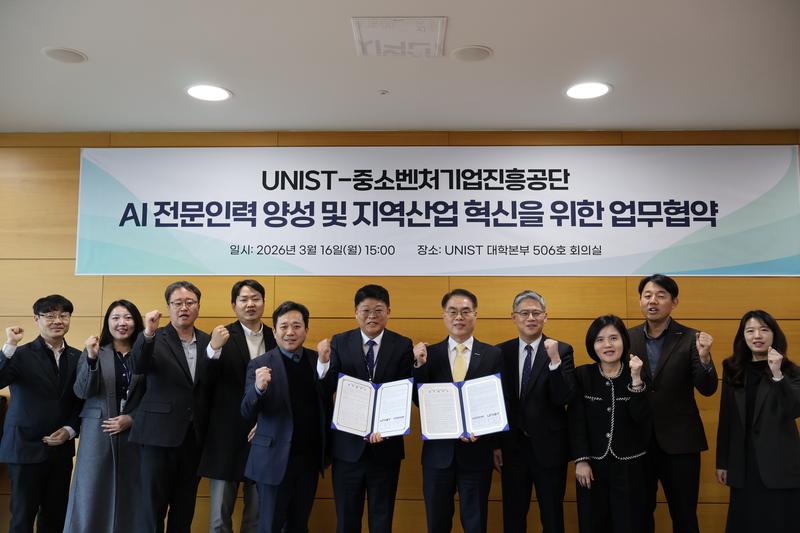
UNIST와 중소벤처기업진흥공단(이사장 강석진, 이하 중진공)이 동남권 중소기업의 AX(인공지능 전환)와 지역 산업 혁신을 위해 손을 맞잡았다. Pioneers 캠퍼스 지역산업혁시팀은 16일 대학본부 회의실에서 중진공과 ‘AI 전문인력 양성 및 지역산업 AI 혁신을 위한 업무협약(MOU)’을 체결했다고 밝혔다. 이번 협약은 UNIST의 교육·연구 역량과 중진공의 중소기업 지원 체계를 결합해, 산업 현장에서 바로 활용할 수 있는 AI 인재를 키우고 중소기업의 디지털 전환을 촉진하기 위해 마련됐다. 두 기관은 앞으로 중소기업 AI 역량 강화를 위한 ▲연수과정 공동 개발·운영 ▲AI 전문인력 양성 ▲산학협력 연구 ▲혁신기술 기반 창업·사업화 지원 ▲프로그램 및 전문가 교류 ▲교육·행사 인프라 공동 활용 등을 함께 추진한다. 핵심은 중소기업 재직자를 대상으로 단기 교육에서 심화 연구, 학위 과정으로 이어지는 성장 경로를 만드는 데 있다. AI 교육과 연구, 창업과 사업화를 하나로 잇는 지역 산업 혁신의 기반을 세우겠다는 구상이다. UNIST는 노바투스 아카데미아와 AI·AX 산학공동연구를 바탕으로 심화 과정과 프로젝트 수행을 지원한다. 중진공 부산경남연수원은 AI 업무 자동화, 불량 예측, 품질검사 분석 등 현장 중심의 기초·실무 교육을 맡는다. 연수 수료자에게는 노바투스대학원 진학 정보도 제공해 실무 교육이 연구와 학위 과정으로 자연스럽게 이어지도록 할 계획이다. 양 기관은 오는 5월부터 7월까지 1차 ‘AI 직무역량 향상 연수’를 운영하고, 하반기에는 노바투스 아카데미아와 연계한 심화 프로그램도 선보일 예정이다. 제조업 비중이 높은 울산·부산·경남에서 중소기업의 AI 현장 적용 역량을 높이고, 지역 산업 경쟁력도 함께 끌어올린다는 목표다. UNIST는 동남권 AI 교육·연구 거점으로 관련 기반을 꾸준히 넓혀왔다. 2020년 동남권 최초로 인공지능대학원을 열었고, 2021년 AI혁신파크를 출범시켰다. 지난해 노바투스대학원을 개원해 기업 수요에 맞춘 교육·연구 체계를 한층 강화했다. 2021년부터 운영 중인 노바투스 아카데미아는 8기 동안 266개 기업, 419명의 실무형 인재를 배출하며 동남권 대표 산업 AI 교육 프로그램으로 자리매김했다. 이번 협력을 계기로 중진공 울산지역본부는 UNIST의 340개 패밀리기업과 Pioneers 캠퍼스 입주기업 등을 대상으로 정책자금, AI 전환, 인력 매칭 등 다양한 지원사업을 연계할 예정이다. 교육과 연구에 그치지 않고 기업 지원까지 연결해 지역 AX 생태계를 넓히겠다는 취지다. 안현실 UNIST 연구부총장은 “AI는 산업 경쟁력을 좌우하는 핵심 요소”라며 “중소기업이 현장에서 곧바로 활용할 수 있는 해법을 만들 수 있도록 교육과 연구, 기술사업화를 유기적으로 연결해 나가겠다”고 말했다. 조한교 중진공 인력성장본부장은 “UNIST는 동남권을 대표하는 AI 교육·연구 거점이며, 노바투스 아카데미아는 실효성이 검증된 교육과정”이라며 “중진공 연수원 네트워크와 UNIST의 혁신적인 AI 역량이 결합되면 중소기업의 AI 대전환에서도 실질적인 성과가 기대된다”고 밝혔다

원자력공학과, ‘원자력 안전규제라운드테이블’ 개최

대학소식 2026년 02월 27일 금요일

“현장 수요가 교과서” UNIST 노바투스대학원 2기 59명 입학

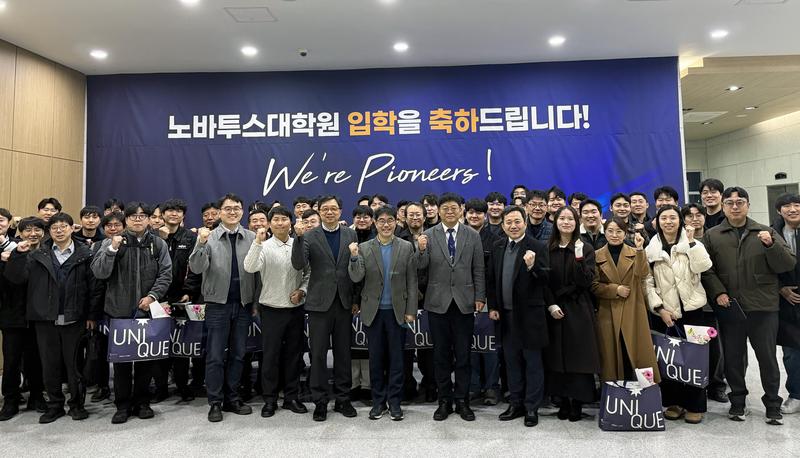
UNIST 노바투스대학원이 2기 신입생 59명과 함께 새 학기를 시작했다. 노바투스대학원은 26일 저녁, 오리엔테이션과 개강식을 열고 수요조사 기반 교과 운영 방향, 팀프로젝트 중심 교육 체계, 산학 연계 프로그램 등을 소개했다. 노바투스대학원은 신입생 수요조사 결과를 바탕으로 교과목을 설계하는 ‘맞춤형 커리큘럼’ 운영에 들어갔다. 학생 수준과 산업 현장 요구를 함께 반영해 교과 난이도부터 실습 비중, 평가 방식까지 조정하는 실전형 교육 체계를 마련했다. 이를 위해 신입생을 대상으로 △관심 분야 △AI 역량 △전공 배경 △선호 수업 방식 △강화 희망 역량 등을 묻는 설문을 진행했다. 단순 의견 수렴이 아니라 신입생의 학습 수준과 현장 수요를 동시에 분석하는 방식으로 운영하며, 조사 결과를 바탕으로 과목 구성과 프로젝트 방향을 세우고 교육과정을 편성했다. 학생 배경이 다양한 점도 교육에 반영했다. 기초 역량 보강이 필요한 학생에게는 이론·실습 비중을 높이고, 현장 경험이 많은 재직자에게는 문제 정의와 사업화 전략에 초점을 둔 심화 프로젝트를 운영하는 방식이다. 팀프로젝트는 현장 문제 해결에 맞춘다. 문제를 정의한 뒤 기술 설계와 실증 전략, 사업화 가능성 검토까지 단계별로 수행하도록 체계화해 교육·연구·산업 적용이 한 흐름으로 이어지도록 했다. 이 과정에서 나온 팀프로젝트 과제가 최근 10억 규모의 정부 지원 AI솔루션 사업에 선정되는 성과도 나왔다. 박종래 총장은 “학생들의 학습 목표와 현장 수요를 고려해 교과목을 짜는 것이 핵심”이라며 “교육 단계에서부터 실행 가능성을 고려해 성과로 연결되는 대학원 모델을 만들고 있다”고 말했다. 노바투스대학원은 앞으로도 학생 중심의 유연한 교육 운영을 바탕으로 AI 기반 문제 해결 역량과 현장 적용 능력을 갖춘 융합형 인재 양성에 박차를 가할 계획이다.

원자력공학과, ‘원자력 안전규제라운드테이블’ 개최

대학소식 2026년 02월 26일 목요일

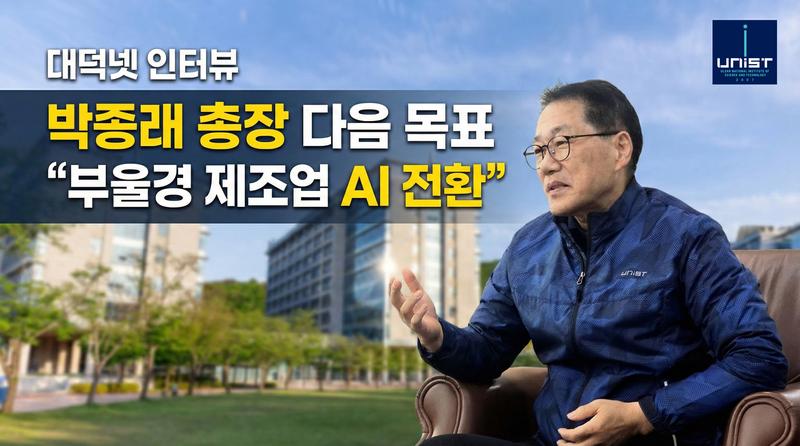
[대덕넷 인터뷰] 박종래 총장 다음 목표 "부울경 제조업 AI 전환"

박종래 총장은 자신을 '촌놈'이라 소개했다. 서울대 졸업 후 모교에서 근무했지만, 가치관과 정체성이 형성되는 학창 시절을 경상남도에서 보냈기 때문이다. 그런 그의 트레이드마크는 울산과학기술원(UNIST) 로고가 새겨진 근무복 차림이다. 단순히 편해서가 아니다. 지역에서 출발해 다시 지역 혁신의 전면에 선 총장으로서의 자부심이 담긴 상징이다. 박 총장은 UNIST 부임 이후 줄곧 'AI 기반 혁신'을 강조해 왔다. 우리나라 최대 중화학공업 도시인 울산의 기업들이 AI를 통해 산업 구조의 대전환을 이루도록 지원하는 한편, 대학 운영 전반에도 AI를 도입하는 혁신을 추진하고 있다. l 출처 : 헬로디디 "울산은 국가산업단지라는 엄청난 자산을 가진 도시입니다. 지역 산업의 특색을 뒷받침할 AI 기술을 접목해 울산의 경쟁력을 높이는 데 집중하고 있습니다." 박 총장은 UNIST 부임 이후 줄곧 'AI 기반 혁신'을 강조해 왔다. 우리나라 최대 중화학공업 도시인 울산의 기업들이 AI를 통해 산업 구조의 대전환을 이루도록 지원하는 한편, 대학 운영 전반에도 AI를 도입하는 혁신을 추진하고 있다. 그가 말하는 '테크 브릿지(Tech Bridge)' 전략이다. 대학의 주요 기능은 인력 양성과 연구다. 그러나 박 총장은 한 단계 더 나아가야 한다고 본다. 논문의 질을 평가하는 네덜란드 라이덴대학이 발표한 '2025 라이덴랭킹'에서 UNIST가 9년 연속 국내 1위를 유지한 만큼, 이제는 연구 성과가 실험실에 머무르지 않고 산업 현장으로 이어져야 한다는 것이다. 논문의 질은 이미 입증됐다. 다음 과제는 산업 연결이다. UNIST는 단순한 교육기관에 머물지 않겠다는 구상이다. 울산의 산업 생태계를 재편하는 핵심 동력이자 세계적 연구 거점으로 거듭나기 위한 새로운 시도가 지역을 바꾸고 있다. 부울경 제조업의 AI 전환을 이끌고 있는 박 총장을 만나 자세한 이야기를 들었다. ◇ "연구는 훌륭하지만, UNIST의 다음은 지역 기여" "연구의 양도 질도 탑 수준이지만 산업체와 연결되지 않는다는 것은 우리가 가진 고질적 문제였습니다. 끊어진 다리를 연결하려면 많이 만나야 합니다." 울산은 자동차, 조선·해양, 석유화학·정유 산업이 집적된 우리나라 대표 공업도시다. 대기업을 중심으로 수백에서 수천 개의 협력사가 연결된 구조 속에서 중소·중견기업들이 촘촘히 얽혀 있다. 제조업이 공간적으로 밀집된 산업 도시다. 최근 AI 등장으로 제조업 고도화는 선택이 아닌 생존 전략이 됐다. UNIST는 HD현대와 함께 '조선·해양 산업 AI 기술 개발 협력'을 진행 중이며, 한국수력원자력과도 'AI 기술을 활용한 전면적 업무 지능화'를 추진하고 있다. 박종래 총장(가운데)이 배경훈 부총리 겸 과학기술정보통신부 장관(왼쪽), 정기선 HD현대 회장과 지난해 11월 20일, 경기 성남 HD현대글로벌 R&D센터에서 '조선·해양 산업 AI 기술개발' 협력 업무협약을 맺었다. 그 출발점은 'UNIST의 연구가 지역에 얼마나 기여하고 있는가'라는 질문이었다. 그동안 UNIST는 고급 과학기술 인재 양성에 초점을 맞춰 왔고, 우수 연구 성과도 다수 배출했다. 라이덴 랭킹 국내 1위라는 성과가 이를 보여준다. 그러나 논문은 많았지만 산업으로 이어지는 연결 고리는 약했다. 박 총장은 이를 '다음 단계'로 규정했다. 대학과 기업이 자연스럽게 만날 수 있는 접점을 늘리는 작업이 필요하다고 판단했다. 그 결과물이 지난해 처음 열린 '울산혁신포럼'이다. "교수와 연구진의 연구 성과는 상당하지만 산업 현장과의 접점이 부족했습니다. 연구자와 기업인이 자주 만나야 한다고 생각했고, 그렇게 시작한 것이 AI를 주제로 산업 전환을 논의하는 울산혁신포럼입니다." 울산혁신포럼은 연구와 비즈니스 현장 사이의 간극을 메우는 테크 브릿지 역할을 하며 1회를 성황리에 마쳤다. 올해 2회 개최를 앞두고 있다. 박 총장은 테크브릿지 전략을 통해 UNIST가 대기업뿐 아니라 중소·중견기업의 R&D '머리' 역할을 기대한다. 이를 위해 추진 중인 것이 연구 인력과 시설, 자원을 기업에 개방해 기술 기획부터 개발까지 함께하는 구조다. 현재 기업이 공동으로 활용할 수 있는 오픈랩을 운영 중이다. 실제로 슈퍼컴퓨팅센터와 연구장비 교육·지원 시설을 개방해 중소·중견기업에게 필요한 분석, 검증, 시제품 제작, 상용화까지 지원하는 원스톱 플랫폼도 운영하고 있다. 그는 "울산의 산업 구조는 대기업 중심의 다단계 밴더 체계다. 4차 협력사까지 이어지는 구조 속에서 중소기업은 독자적인 R&D를 할 필요가 적었다"면서 "R&D 인력도 수도권으로 빠져나가면서 지역 산업은 '머리는 없고 손발만 움직이는 구조'로 고착되는 문제가 있었다. 우리의 방향은 지역 기업의 머리가 되어주는 것"이라고 설명했다. 박 총장은 "산업현장에 필요한 연구를 위해 UNIST는 작은 아이디어도 창업할 수 있도록 교수 창업제도도 개편했다"면서 "4대과기원 중 UNIST는 유일하게 바다를 끼고 있어 조선·해양특화 연구가 가능하며 여기에 필요한 AI제조 도입을 지원할 수 있는 연구기관으로 이미 지역의 관련 기업들과 협업 중이다. UNIST의 지식과 노하우를 지역 사회에 이식하고, 울산을 산업 조정의 메카로 만들기 위한 핵심적인 협력 플랫폼으로서 기능하도록 테크 브릿지를 운영할 것"이라고 덧붙였다. UNIST는 논문의 질을 평가하는 네덜란드 라이덴대학이 발표한 '2025 라이덴랭킹'에서 9년 연속 국내 1위를 유지하고 있다. 하지만 박종래 총장은 지역기여부분에서 아쉬움이 크다고 말했다. 이에 지역 기업의 AI전환을 적극적으로 추진한다는 계획이다. ◇ AI 지원, 울산 넘어 동남권으로 울산의 AI화는 단순히 한 지역에 국한되지 않는다. AI등 과학기술을 통해 UNIST가 부울경 전체를 아우르는 '동남권 펜타곤'의 중심 센터 역할을 수행하는 기반이 되어야한다고 강조한다. 이를 위해 추진 중인 것이 2021년 설립된 UNIST 노바투스대학원이다. 국가산업의 지속 가능한 발전과 기업 현장의 실질적 문제 해결을 위해 설립된 노바투스대학원은 급변하는 산업 환경 속에서 첨단 기술을 신속히 전파하고 현장 적용이 가능한 실무형 인재 양성을 목표로 한다. 그는 "노바투스대학원을 통해 각 지역 산업적 특색을 뒷받침하는 AI기술을 접목시킬 수 있는센터의 역할을 하고 있다"며 "재직자 대상 교육으로 경남, 울산, 부산 등 여러 지역에서 운영 중으로 기업의 AI화가 구호에 그치지 않도록 타지역 확산도 추진 중"이라고 설명했다. 이와 함께 박 총장은 파편화된 동남권 창업자원을 통합, 연구 성과가 '창업–기술지주투자–사업화'로 이어지는 체계적 구조를 정착시킨다는 계획을 가지고 있다. 인재들을 한 지역에 묶어둬야 한다는 것이 아니다. 울산에서 배우고 도전하고 창업하고 싶은 청년이 있다면 그 선택이 불리하지 않도록 만들고, 세계를 무대로 뻗어나갈 수 있도록 지원해야한다는 설명이다. 그는 "UNIST 주변에 청년 테크단지를 만들어 창업-문화-교육이 어우러지게 해야한다. UNIST뿐 아니라 부울경 청년들이 모여 함께할 수 있는 구조를 만들 것"이라고 피력했다. ◇ 노벨상 넘어 노벨같은 인재로... 개척자형 인재 육성 "노벨상을 타는 인재가 아니라 노벨 같은 인재를 만들어 상을 주도록 해야지요." 박 총장은 앞으로 필요한 인재에 대해 "변화의 시대를 헤쳐 나갈 능력을 가진 인재"라고 꼽았다. 시대가 급변하면서 사물과 현상이 작동하는 원리와 그 파급력을 읽어내는 통찰력이 더욱 중요해졌다는 설명이다. 그는 "이러한 통찰력을 바탕으로 세상에 없던 일을 찾아내거나 새로운 길을 개척할 수 있는 능력을 갖추는 것이 변화의 시대를 이끄는 핵심"이라고 말했다. 이와 함께 논문이나 학위 중심의 학문적 성취에만 머무르는 것이 아니라, 알프레드 노벨처럼 연구 성과를 산업과 사회적 가치로 연결할 수 있는 인재를 키우겠다는 구상도 밝혔다. 그는 "기초과학 투자도 중요하지만, 우리에게 필요한 것은 연구 성과를 비즈니스로 연결해 사회에 영향을 미치고, 궁극적으로 자신의 이름을 건 상을 만들 수 있는 사람"이라고 강조했다. 이에 울산과학기술원(UNIST)는 교육 자체의 변화를 위해 교수 강의 성과를 평가할 수 있는 도구를 자체 개발 중이다. 박 총장은 "고교 교육은 이미 다양한 시도를 해왔다. 이제는 대학이 답해야 할 차례"라며 "입시 이후 학생을 어떻게 성장시킬 것인지, 대학이 어떤 책임을 질 것인지가 더 중요하다"고 말했다. 그러면서 그는 "그동안 외부 기관의 평가를 받아왔을 뿐, 우리 교육을 스스로 점검할 기회는 많지 않았다"며 "변화에 강한 인재를 제대로 길러내고 있는지 자가 진단할 수 있는 평가 체계를 마련해 적용할 계획"이라고 말했다. 이와 함께 박 총장은 '캠퍼스 AI화'도 집중할 계획이다. UNIST는 지난해 11월 국내 대학 최초로 생성형 AI 기반 플랫폼 '유니아이(UNIAI)'를 자체 구축해 정식 오픈했다. 캠퍼스 내 복잡한 규정과 지침에 대한 반복 질문을 효율적으로 해결하는 챗봇 시스템이다. 앞서 UNIST는 캠퍼스 AI화를 통해 기술이전 계약서 검토 기간을 한 달에서 하루로 단축하기도 했다. 그는 "변화하는 시대를 헤쳐 나갈 능력을 키우는 것이 대학의 책무"라며 "대학이 먼저 AI를 통해 변화된 모습을 보여줌으로써 교육과 행정 전반의 혁신을 이끌어내겠다"고 밝혔다. <본 기사는 2026년 2월 25일 헬로디디(대덕넷) "박종래 총장 다음 목표 "부울경 제조업 AI 전환""라는 제목으로 실린 것입니다.>

원자력공학과, ‘원자력 안전규제라운드테이블’ 개최

대학소식 2026년 01월 27일 화요일

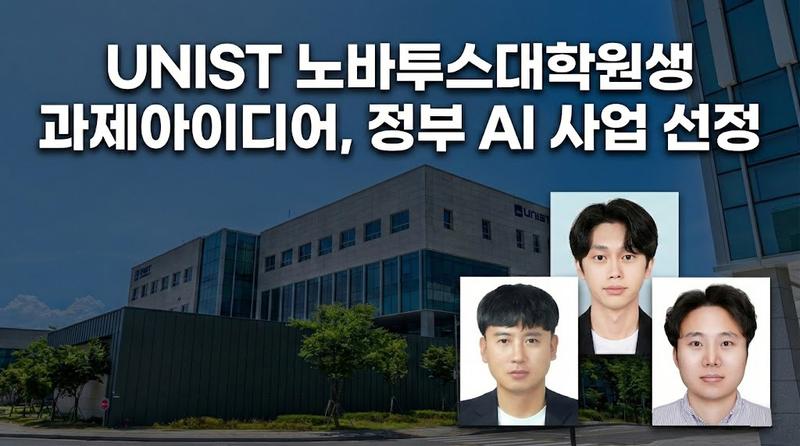
UNIST 노바투스대학원생 과제아이디어, 정부 AI사업 선정됐다

대학원 수업에서 나온 아이디어가 산업 현장의 해법으로 채택됐다. UNIST 노바투스대학원에서 수업 과제로 수행한 팀 프로젝트가 정부가 지원하는 ‘AI솔루션 개발·실증 지원(가치사슬형·저변확대형) 사업’에 선정됐다. 연구비는 약 10억2000만원 규모다. 노바투스대학원은 산업 현장 경험을 지닌 재직자를 대상으로 실무 중심의 공학석사 과정을 운영하고 있다. 인공지능(AI)을 축으로 기술 이해는 물론 기술경영, 사업 기획, 실증 전략까지 함께 다룬다. 이론 전달에 그치지 않고, 강의마다 산업 현장에서 제기된 문제를 과제로 끌어와 팀 프로젝트로 발전시키는 방식이 특징이다. 과제에 참여한 김민구·오원석·황보현 학생은 모두 산업체 재직자다. 특히, 김민구 와프(Waff) 대표는 경남 노바투스 아카데미아, 오원석 현우산기(주) 이사는 울산 AI 최고경영자과정 등 UNIST 산업 연계 교육 과정을 거쳐 노바투스대학원에 진학했다. 이번 성과는 역시 산업 맞춤형 교육 과정에서 출발했다. 신승렬 기술경영전문대학원 교수가 맡은 팀 프로젝트 수업(AI 기술경영)에서 산업인공지능 프로그램 소속 학생 3명은 각자가 몸담은 현장에서 겪은 문제를 공유했다. 문제를 다시 정의하고, AI 기술을 접목한 해결 방안을 과제로 구체화했다. 수업 과정에서는 기술 구조 설계와 함께 사업화 가능성까지 단계적으로 검토가 이뤄졌다. 강의실에서 다듬어진 기획은 과제 신청으로 이어졌다. 문제 정의와 기술 구상을 토대로 정부지원사업에 도전했고, 과제는 온톨로지(Ontology)와 검색증강생성(RAG) 서비스 기반 AI 모델을 실증하는 연구로 넓혔다. 교육에서 나온 아이디어가 연구와 산업 현장으로 확장된 셈이다. 과제 수행 과정에서는 노바투스대학원 소속 교원과의 협업을 통해 기술적 완성도와 현장 적용성을 높이는 실증 연구가 추진될 예정이다. 이는 노바투스대학원 설립 취지가 실제 작동하고 있음을 보여주는 대표적 성과로 평가된다. 현장 문제를 강의로 끌어들이고, 문제 정의부터 기술 기획, 실증 단계까지 하나의 흐름으로 완성하는 구조가 교육 과정 속에서 구현됐다. 과제 주제를 제안한 김민구 와프 대표는 수업 경험을 결정적 계기로 꼽았다. 김 대표는 “현장에서 막연하게 받아들이던 문제를 수업을 통해 다시 정리할 수 있었다”며 “기술과 사업 관점에서 구조화하는 훈련이 큰 도움이 됐다”고 말했다. 그는 또 “아이디어에 그치지 않고 실행 가능한 과제 틀을 교과과정 안에서 만든 점이 이번 과제 선정에 도움이 됐다”고 덧붙였다. 박종래 총장은 “노바투스대학원이 1기 과정임에도 불구하고, 우수한 학생과 차별화된 수업 운영으로 산업 연계 교육의 방향성을 성과로 증명했다”며 “강의실에서 시작된 아이디어가 현장 문제를 해결한 사례는 노바투스대학원 AI 교육 모델의 경쟁력을 보여준 것”이라고 전했다. UNIST 노바투스대학원은 앞으로도 산업체 재직자의 현장 경험을 교육 과정에 적극 반영하고, 수업에서 나온 아이디어가 연구와 사업 성과로 창출되도록 지원을 강화할 계획이다.

원자력공학과, ‘원자력 안전규제라운드테이블’ 개최

대학소식 2026년 01월 14일 수요일

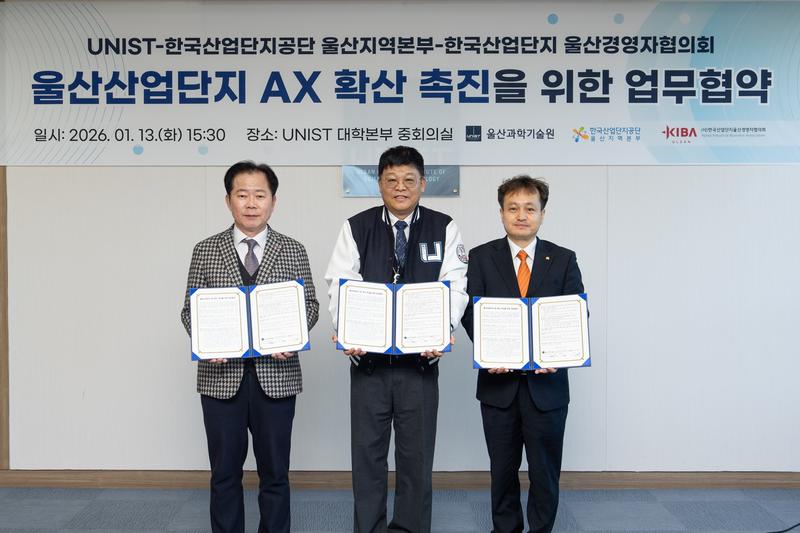
UNIST-산단공-울산경협, 울산 산단에 ‘AI 입힌다’… AX 생태계 조성

UNIST가 한국산업단지공단 울산지역본부, 한국산업단지 울산경영자협의회와 손잡고 울산 산업단지 기업의 AI 역량 강화에 나선다. 세 기관은 13일 대학본부에서 업무협약을 체결하고, 산업 현장의 AX(AI 전환) 확산을 위한 협력을 본격화하기로 했다. 이번 협약은 AI 교육과 연구, 현장 적용, 확산으로 이어지는 전 주기 협력체계 구축이 핵심이다. 산업 현장에 필요한 AI 활용 역량을 체계적으로 키워 울산 산업단지 전반의 혁신 경쟁력을 높이겠다는 구상이다. 협약에 따라 UNIST는 노바투스대학원을 중심으로 운영 중인 AI 재직자 과정과 CEO 과정, 단기 특화 과정에 울산 산업단지 기업 임직원의 참여를 지원한다. 현장 인력이 업무와 직결된 AI 교육을 받을 수 있도록 문을 여는 것이다. 산단공 울산본부의 추천을 받아 노바투스대학원에 지원한 중소기업 임직원에게는 장학 혜택이 제공된다. 교육 참여에 따른 부담을 낮추는 한편, 산단공 울산본부와 울산경영자협의회는 교육과정 홍보와 인재 추천을 맡아 참여 기반을 넓힌다. 세 기관은 이와 함께 △산업 현장 문제 해결을 위한 산학 공동연구 및 실증 프로젝트 발굴 △기업 수요 기반 AX 과제 도출 및 수행 △성과 공유회·세미나·포럼 등을 통한 AI 적용 활동도 공동 추진하기로 했다. 교육과 연구 성과가 울산 산업단지 전반으로 파급될 것으로 전망된다. 이번 협약은 울산 산업단지 차원에서 AI 교육·연구·확산을 유기적으로 연계한 협력 모델을 마련했다는 점에서도 의미가 있다. UNIST 노바투스대학원을 거점으로 산업 현장 수요에 맞춘 AI 인재 양성과 산학 협력을 강화해, 울산 산업단지 기업 AX를 축으로 지역 산업 전반의 혁신 경쟁력 제고를 도모할 계획이다. 안현실 연구부총장은 “이번 협약은 울산 산업단지 기업들이 AI를 단순히 도입하는 단계를 넘어, 현장 혁신으로 연결하는 중요한 전환점”이라며 “노바투스대학원의 실무 중심 교육과 산학 협력을 통해 지역 산업의 AX 확산을 지속적으로 뒷받침하겠다”고 말했다.

원자력공학과, ‘원자력 안전규제라운드테이블’ 개최

대학소식 2025년 12월 03일 수요일

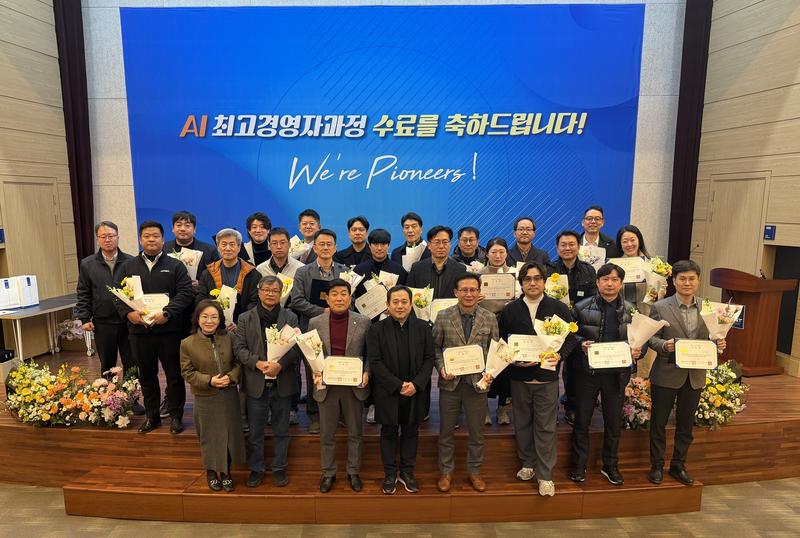
UNIST, 울산 AX 제조혁신 이끌 CEO 40명 배출… 1기 ‘AI최고경영자과정’ 수료

UNIST는 3일 오후 Pioneers 캠퍼스에서 ‘울산 AI최고경영자과정’ 1기 수료식을 열고, 산업현장에서 AI 혁신을 이끌 기업 리더 40명을 배출했다. 이번 과정은 빠르게 재편되는 기술 환경 속에서 지역 제조기업의 AX(AI 전환)을 지원하기 위해 마련됐다. 교육은 인공지능과 빅데이터 분석, 공정 개선 전략 등 지역 제조업 AX에 필수적인 내용을 다뤘다. 특히 기존 교양 중심의 최고경영자과정과 달리, UNIST 연구성과와 기업 실증사례를 반영한 실무 중심 체계로 구성해 차별화된 커리큘럼을 제공했다. 기업들이 실제 산업현장에서 필요한 요구를 반영해 △AI 도입 전략 △산업데이터 활용 및 분석 방법 △공정 효율화 사례 △AI 기반 경영혁신 방안 등을 체계적으로 짚었다. 참여한 경영진은 이를 기반으로 자사 산업구조에 맞는 실무형 AX 로드맵을 직접 수립할 수 있는 역량을 키웠다. 김남훈 노바투스대학원장은 “울산은 제조업 중심도시이자 기술 변화가 빠른 도시”이라며 “수료생들은 급진전하는 AI 기술과 디지털 전환 전략을 직접 학습하며 기업의 AX 전략을 구체화했다. 이 경험이 울산 산업혁신의 동력이 될 것”이라고 말했다. 수료 이후에는 동문 네트워크를 중심으로 산학 교류 플랫폼을 더욱 확대할 예정이다. 업종은 달라도 AX라는 공통 목표를 공유하면서 협업 가능성도 커졌다. 산학 공동프로젝트 발굴 논의도 이어지고 있다. 이를 토대로 울산 전반에 AI 기반 혁신 생태계를 확산시킨다는 계획이다. 박종래 총장은 “이번 AI최고경영자과정은 기업이 안고 있는 문제를 AI로 해결하는 데 초점을 맞춘 프로그램이었다”고 강조했다. 이어 “수료생들이 울산 제조업 전반에 새로운 변화를 만들 것”이라며 “UNIST 노바투스대학원은 지역 기업과의 협력을 넓혀 AX 중심 제조혁신을 가속하고, 동남권 산업계에 맞춤형 교육과 기술 자문을 지속적으로 제공하겠다”고 밝혔다.

원자력공학과, ‘원자력 안전규제라운드테이블’ 개최

대학소식 2025년 11월 28일 금요일

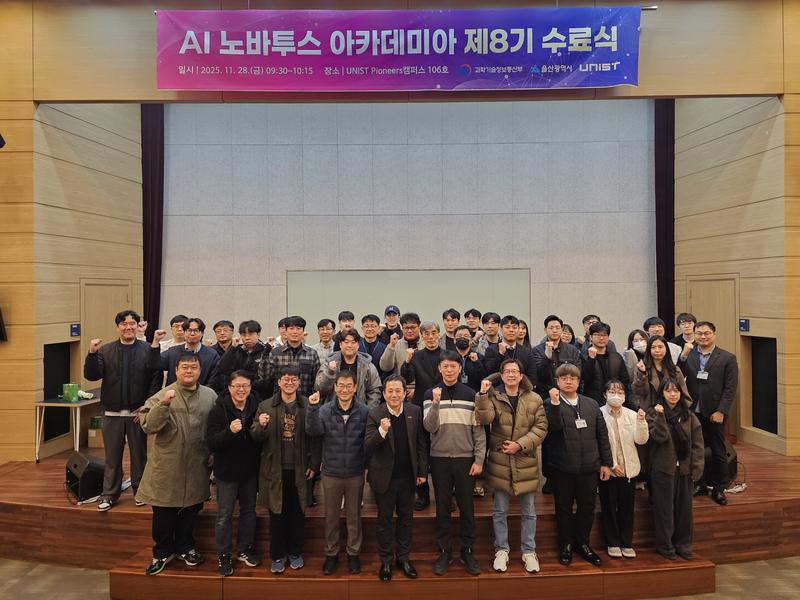
‘AI 노바투스 아카데미아 울산과정 8기’ 37명 수료

UNIST와 울산시는 28일, Pioneers 캠퍼스에서 열린 ‘AI 노바투스 아카데미아 울산과정 8기 수료식’에서 총 37명의 수료생을 배출했다. 이번 8기 과정은 울산 제조업의 디지털 전환을 위해 실제 산업현장에서 바로 활용 가능한 AI 역량을 갖춘 실무자 양성을 목표로 운영됐다. 교육은 지난 6월부터 20주 동안 진행됐으며, 참여자들은 기업 데이터를 활용한 실습, 현장 문제 해결 중심의 PBL(Project-Based Learning) 등 현장에서 즉시 적용 가능한 실무형 커리큘럼을 이수했다. 김남훈 Pioneers 캠퍼스 단장이 수료생들에게 축사를 전하고 있다. 이날 수료식에서 김남훈 UNIST Pioneers캠퍼스 단장은 축사에서 “AI는 기술 그 자체보다, 각 기업의 문제를 해결하기 위한 강력한 도구”라며, “20주간의 도전 속에서 실무자들이 보여준 집중력과 성장 의지는 울산 산업의 혁신을 이끌 중요한 기반이 될 것”이라고 말했다. UNIST AI 노바투스 아카데미아는 울산 지역 산업 현장에서 필요한 기술·인재·솔루션을 제공하며 AI 기반 제조혁신의 핵심 플랫폼으로 자리잡고 있다. 지금까지 총 134개 기업에서 250명의 실무형 AI 인재를 육성했고, 작년 7기 교육을 통해 35명의 수료생을 배출하는 등 지역 제조업 디지털 전환 생태계를 꾸준히 확장하고 있다.

원자력공학과, ‘원자력 안전규제라운드테이블’ 개최

대학소식 2025년 11월 25일 화요일

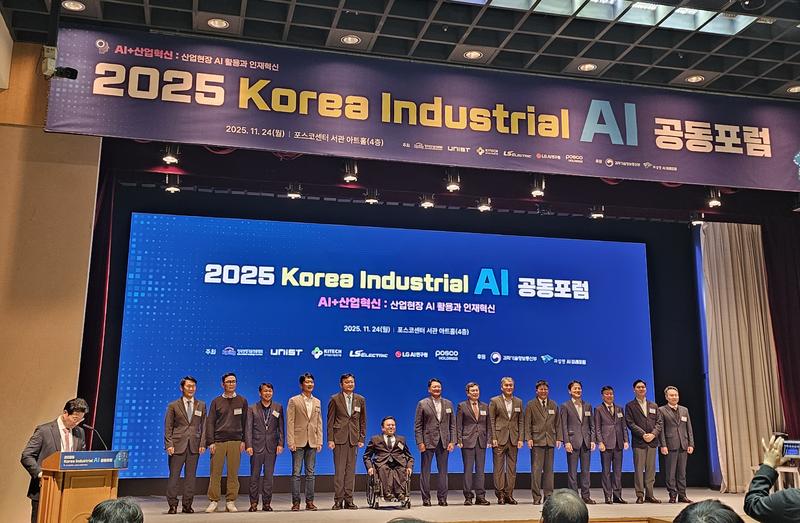
“산업AI 전환 속도 낸다” UNIST, ‘2025 코리아 인더스트리얼 AI포럼’ 성과 발표

UNIST를 비롯한 산·학·연 6개 기관은 24일 서울 포스코센터에서 ‘2025 Korea Industrial AI 공동포럼’을 개최하고, 제조업 현장의 AI 활용성과와 기업 인재혁신 사례를 공유했다. 행사에는 산업계 최고기술책임자(CTO)·디지털전환(DT) 임원, 출연연 관계자 등 200여 명이 참석해 성황을 이뤘다. 올해 포럼 주제는 ‘AI+산업혁신: 산업현장 AI 활용과 인재혁신’으로, 국내 제조기업의 AI 확산을 촉진하기 위한 실제 적용사례와 정책·기술 전략이 다뤄졌다. 행사는 UNIST, 한국산업기술진흥협회(산기협), 한국생산기술연구원(생기원), LS일렉트릭, LG AI연구원, 포스코홀딩스가 공동 주최하고 과학기술정보통신부와 과실연 AI미래포럼이 후원했다. 개회식에서는 구자균 산기협 회장의 환영사에 이어 이상목 생기원장과 안현실 UNIST 연구부총장이 인사말을 전했다. 안현실 연구부총장이 '2025 Korea Industrial AI 공동포럼'에서 인사말을 전하고 있다. 안 부총장은 “AI 도입은 산업 경쟁력의 핵심 전략이며, 제조 현장 문제를 해결하는 실무형 AI 인재 양성이 무엇보다 중요하다”며 “UNIST가 한국의 산업 펜타곤에 해당하는 부·울·경과 경주·포항 지역 산업AI 기술의 연구와 실증, 인재 양성에 속도를 내겠다”고 강조했다. 이어 박태완 과학기술정보통신부 정보통신산업정책관은 축사에서 “국내 제조업이 글로벌 경쟁에서 살아남기 위해서는 AI 기반 생산혁신이 반드시 필요하다”며 정부 차원의 지속적인 지원 의지를 밝혔다. 첫 번째 세션에서는 기업의 실제 AI 활용사례가 집중 소개됐다. 김무상 포스코홀딩스 그룹DX전략실 부장은 AI 기반 공정 최적화·예측 모델 도입 현황을 발표하며 철강 제조라인의 안정성과 생산성을 높인 사례를 공유했다. 채규일 HD현대삼호 상무는 조선 현장의 AX 기술 기반 공정 자동화 사례를 소개하고, 장현영 한국전력기술 소장은 AI·디지털 기술을 활용한 발전 설비 예측진단 및 운영 고도화 성과를 발표했다. 김기수 딥아이 대표가 'AI 전환 시대, 전통뿌리산업의 진화 등'에 대한 주제로 UNIST 협력 사례를 발표하고 있다. 이번 포럼에서 가장 주목받은 발표는 딥아이(대표 김기수)의 ‘AI 비파괴검사 솔루션’이었다. 딥아이는 UNIST와 협업해 금속·기계·에너지 분야의 설비 결함을 AI로 실시간 판독하는 비파괴검사(NDT) 기술을 고도화하고 있으며, 이는 기존 장비 의존도가 높았던 전통 제조업에 즉각 적용 가능한 혁신 모델로 평가받고 있다. 특히 딥아이는 AI 영상분석 전문기업으로, 현장 사진·영상 데이터를 활용해 판독 정확도를 대폭 향상시킨 사례를 공개해 참석자들의 큰 관심을 받았다. 박종래 총장은 “AI 기술의 현장 적용성과 인재 역량 강화가 국내 제조업의 지속 가능한 경쟁력을 좌우할 것”이라며 “UNIST는 지역 제조기업과 출연연과의 협업을 확대해 AI 기반 제조혁신 모델을 고도화하고 실무형 인재 양성을 강화할 것”이라고 밝혔다.

원자력공학과, ‘원자력 안전규제라운드테이블’ 개최

Research 2026년 06월 01일 월요일

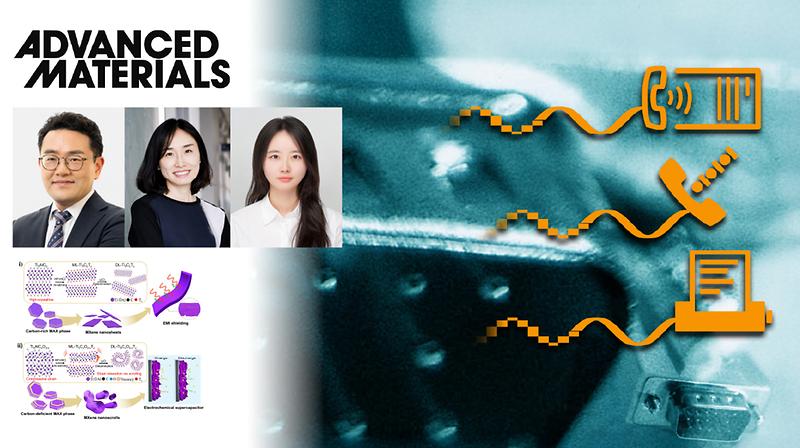
Breakthrough Chameleon MXene Promises Advanced 6G Communication and Next-Gen Batteries

Abstract Device-level performance in MXenes is dictated by architecture—planar nanosheets are optimal for electromagnetic interference (EMI) shielding, while scrolled structures enhance ion transport for energy storage—particularly when morphology is programmed at synthesis. Whether such architectures can be deterministically encoded through precursor stoichiometry remains unresolved. Here, we demonstrate that precise carbon stoichiometry control in Ti3AlCxO2-x MAX phases tunes internal lattice strain and thereby directs the emergent MXene architecture. Carbon-rich precursors (x = 1.94) yield strain-relieved, high-crystalline nanosheets with metallic conductivity (∼23 300 S cm−1), enabling ultrathin films with record-high EMI shielding performances across 8 µm) and robust W-band retention after 5,000 bending cycles (r = 2.5 mm). In contrast, carbon-deficient precursors (x = 1.71) introduce lattice compression and oxygen substitution, triggering spontaneous scrolling upon delamination. The resulting nanoscrolls offer exceptional ion accessibility, achieving 657 F g−1 at 2 mV s−1 with 99.4% retention over 12 000 cycles. This stoichiometry-programmed approach establishes a synthesis-stage lever linking MAX chemistry to MXene architecture and function, enabling application-specific architecture design within established MAX/MXene synthesis and solution-processing workflows for next-generation electronics and energy storage. Researchers at UNIST have discovered a simple way to control MXene's structure by adjusting the carbon content in its precursor. This breakthrough enables the creation of tailored MXene materials optimized for high-frequency electromagnetic interference (EMI) shielding and rapid energy storage. MXene, a two-dimensional material composed of metal and carbon layers, is celebrated for its excellent electrical conductivity and adaptability. Its potential spans batteries, sensors, and flexible electronics. With the rise of 6G technology and advanced radar systems, shielding devices against high-frequency interference has become critical. At the same time, the demand for quick, reliable energy storage continues to grow. Led by Professor Soon-Yong Kwon from the Graduate School of Semiconductor Materials and Devices Engineering and Professor EunMi Choi from the Department of Electrical Engineering, the team showed that changing the carbon content in MAX precursors influences how MXene forms during synthesis. This control method results in two distinctly different structures. When using carbon-rich precursors, the process yields flat, highly crystalline nanosheets that exhibit excellent electrical conductivity, effective electromagnetic shielding at 100 GHz, and maintain flexibility and durability under repeated bending. Conversely, employing carbon-deficient precursors induces the spontaneous formation of nanoscrolls, which significantly enhance ion transport. These nanoscroll structures enable high-capacity energy storage, achieving a capacitance of 657 F/g and a cycle life exceeding 12,000 cycles. This work confirms that simple adjustments to precursor composition can produce MXene structures tailored for specific applications—flat sheets for shielding and scrolls for energy storage—within a streamlined process. First author Jaeeun Park explains, “We showed that flat MXene sheets are ideal for electromagnetic shielding, while scroll structures are better suited for energy storage. By controlling the precursor, we can design the material for different functions without changing the synthesis method.” Professor Kwon adds, "Last year, we enhanced MXene's conductivity and broadband shielding through nitrogen doping. Now, we've demonstrated how to design the material's shape from the start. The ultra-thin, flexible MXene performs well at 100 GHz and withstands bending, making it a promising lightweight, flexible shield for future 6G and radar systems." Supported by the Ministry of Science and ICT (MSIT) and the National Research Foundation of Korea (NRF), the study was published in Advanced Materials on May 18, 2026. Journal Reference Jaeeun Park, Ju-Hyoung Han, Yujin Chae, et al ., “Stoichiometry-Programmed MXenes via Precursor Engineering for High-Performance EMI Shielding and Energy Storage,” Adv. Mater ., (2026).

원자력공학과, ‘원자력 안전규제라운드테이블’ 개최

Research 2026년 05월 18일 월요일

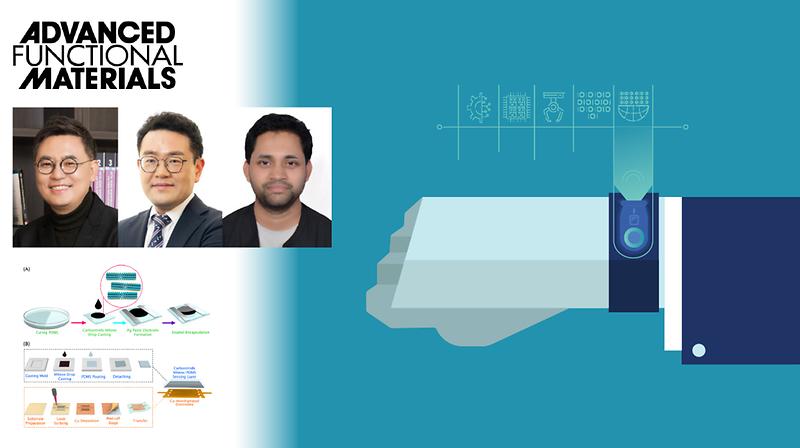
Ultra-Sensitive Wearable MXene Sensor for Real-Time Human-Machine Interfaces

Abstract In the era of autonomous systems and multifunctional devices, sensors serve as vital sensory components in our Internet of Things and technologically advanced society. At the end of the synthetic 2D nanomaterials research, MXenes are not just chemicals but materials, depending on how they are synthesized for targeted applications, such as dual-functional temperature and pressure-sensitive wearable sensing. The current findings introduce the potential strategic role of nitrogen atoms to the Ti-Carbonitride (Ti3CNTz) structure in a controlled compositional stoichiometry of Ti3C1.8N0.2Tz, Ti3C1.5N0.5Tz, Ti3CNTz, Ti3C2Tx to deliver an ultrahigh sensitivity (300%–400% temperature & pressure sensitivity enhancement) and durability in real-time human-machine sensing interface applications. These recorded outstanding dual-sensing performance outplays many other MXene stoichiometries, graphene-related 2D nanomaterials, and their associated composites. Synchrotron radiation-based We provide valuable insights for developing advanced sensing materials, emphasizing the need to investigate the fundamental mechanisms that control the interactions among layered 2D MXene materials and the sensing device functions that bridge human and machine interfaces. A research team, affiliated with UNIST, has unveiled a groundbreaking wearable sensor material, capable of detecting body temperature, coughing, swallowing, and other subtle physiological signals when applied to the skin. Led by Professors Soo-Hyun Kim and Soon-Yong Kwon from the Graduate School of Semiconductor Materials and Devices Engineering, the team developed a novel titanium carbonitride-based MXene (Ti3CNTz) with unparalleled sensitivity to both temperature and pressure. This innovation achieves over three times the temperature sensitivity and more than four times the pressure sensitivity of conventional MXenes, enabling precise detection of minute biological cues. This advanced material, Ti3CNTz, benefits from carefully optimized nitrogen content, which enhances electrical conductivity and lattice vibrational responses. Its unique structure not only boosts sensitivity but also enhances mechanical durability, as validated through both theoretical and experimental analysis. In practical applications, sensors made from this MXene accurately distinguish subtle vocal cord vibrations, blinking, pulse waves, and gait patterns—all without direct contact. Remarkably, they can even detect temperature changes from a short distance, such as infrared heat emitted by a smartphone flash. Professor Kim highlights that this multifunctional sensor represents a transformative development in next-generation human-machine interfaces and electronic skin. Its versatility paves the way for numerous applications in healthcare, energy storage, catalysis, and electromagnetic shielding. Professor Debananda Mohapatra, the first author of the study, emphasized that this 2D MXene advancement sets a new benchmark in intelligent sensing, enabling next-generation sensing devices to bridge human–machine interfaces with exceptional sensitivity and scalability. Also said, this work serves as a stepping stone for the vast 2D MXene family of nanomaterials, accelerating applications across healthcare, AI robotics, and smart wearables. Published in Advanced Functional Materials , this research was supported by the National Research Foundation of Korea (NRF) and the InnoCORE program of the Ministry of Science and ICT. Journal Reference Debananda Mohapatra, Ju-Hyoung Han, Hyun Jin Kang, et al ., “Anomalous Pressure-Temperature Ultrahigh Sensitivities in Atomically Engineered Carbonitride MXenes for Multifunctional Wearable Human–Machine Interfaces: Joint Computational–Experimental Elucidations,” Adv. Funct. Mater., (2026).

원자력공학과, ‘원자력 안전규제라운드테이블’ 개최

Research 2026년 05월 11일 월요일

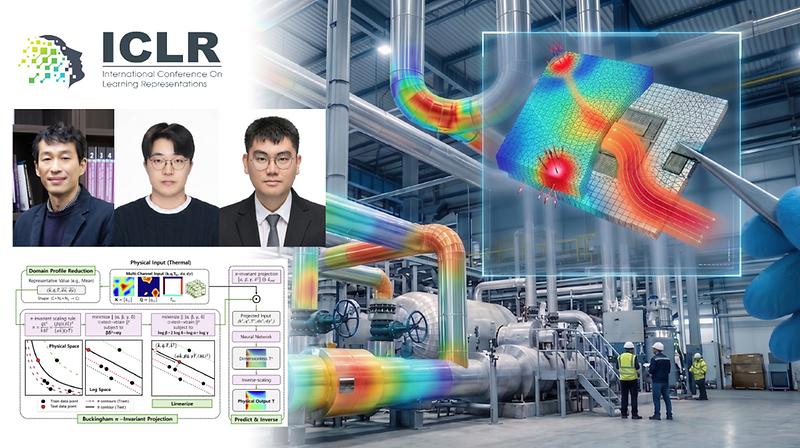
New AI Algorithm to Enhance Accuracy of Thermal and Stress Predictions in Semiconductors

Abstract PDE surrogate models such as FNO and PINN struggle to predict solutions across inputs with diverse physical units and scales, limiting their out-of-distribution (OOD) generalization. We propose a π-invariant test-time projection that aligns test inputs with the training distribution by solving a log-space least squares problem that preserves Buckingham π-invariants. For PDEs with multidimensional spatial fields, we use geometric representative π-values to compute distances and project inputs, overcoming degeneracy and singular points that limit prior π methods. To accelerate projection, we cluster the training set into K clusters, reducing the complexity from O(MN) to O(KN) for the M training and N test samples. Across wide input scale ranges, tests on 2D thermal conduction and linear elasticity achieve MAE reduction of up to ≈91% with minimal overhead. This training-free, model-agnostic method is expected to apply to more diverse PDE-based simulations. A research team affiliated with UNIST has introduced a novel AI-based algorithm that enhances the accuracy of thermal and mechanical predictions across various scales, from microchips to large pipelines. Led by Professor Changwook Jeong from the Graduate School of Semiconductor Materials and Devices Engineering, their π-invariant test-time projection method realigns input data to conform with physical laws, addressing a crucial challenge in AI modeling—accurate predictions when faced with unfamiliar or out-of-distribution data. The algorithm identifies the most physically similar data within existing training sets based on a dimensionless ratio derived from Buckingham's π theorem. It then transforms new inputs into familiar, physically consistent forms without retraining the model, operating in log space to preserve physical ratios. This approach is computationally efficient, reducing processing costs by approximately 99% compared to traditional methods. Applied to 2D thermal conduction and linear elasticity problems, the technique achieved up to a 91% reduction in prediction error, even under conditions outside the original training range. It also demonstrated promising results in fluid dynamics, improving the accuracy of Navier–Stokes equation predictions in complex scenarios. This advancement is expected to accelerate and economize simulations in semiconductor design, packaging reliability, battery management, and structural safety analysis—fields where varying sizes and conditions demand both precision and efficiency. The study has been supported by the National Research Foundation of Korea (NRF) and the Institute of Information & Communications Technology Planning & Evaluation (IITP). Journal Reference Seokki Lee, Min-Chul Park, Giyong Hong, and Changwook Jeong, "Buckingham π-Invariant Test‑Time Projection for Robust PDE Surrogate Modeling," ICLR 2026 .

원자력공학과, ‘원자력 안전규제라운드테이블’ 개최

News 2026년 04월 13일 월요일

UNIST Launches Major AI Initiative to Transform Shipbuilding Industry

UNIST has launched a major interdisciplinary research initiative to accelerate AI-driven transformation (AX) across the shipbuilding sector. Selected under the Ministry of Science and ICT’s national initiative for large-scale industrial AI, the project is supported by a total budget of KRW 40.3 billion (approximately USD 30 million). It aims to develop domain-specific AI foundation models trained on real-world shipyard data and deploy them in operational environments. The initiative brings together faculty from the Graduate School of Artificial Intelligence (AIGS), along with multiple engineering and business disciplines, forming a collaborative structure that spans the full lifecycle of industrial AI—from data generation and model training to system deployment and real-world validation. At the core of the project is the development of a multimodal, domain-specific foundation model for shipbuilding. This effort is led by Professor Sung Youb Kim from the Graduate School of Semiconductor Materials and Devices Engineering, with participation from Professors Seung-Hoon Na, Youngsoo Jang, Seungryul Baek, and Taehwan Kim from AIGS, along with Professor Hayoung Chung from the Department of Mechanical Engineering. The team will develop a model capable of integrating diverse data generated across shipyard operations, serving as a central engine for a wide range of downstream applications. Complementing this effort, a parallel workstream led by Professors Sung Whan Yoon, Jae-Young Sim, and Yeon-Chang Lee from AIGS, along with Professor Saerom Park (Department of Industrial Engineering) and Professor Seongil Wi (Department of Computer Science and Engineering) will establish a scalable industrial platforms for optimized for heterogeneous datasets. In parallel, Professors Seungjoon Yang, Gi-soo Kim, and Yeon-Chang Lee from AIGS will lead research on synthetic data generation, addressing limitations in real-world data and improving model robustness across diverse scenarios. Application-focused research will be led by Professors Youngdae Kim, Sungil Kim, Hyungho Na, Dong Young Lim, and Chiehyeon Lim from the Department of Industrial Engineering, along with Professor Junghoon Kim (Department of Computer Science and Engineering), Professor Jinyoung Choi (AIGS), and Professor Junhyoung Ha (Department of Mechanical Engineering). Their work will focus on manufacturing optimization, production scheduling, predictive maintenance, and the intelligent operation of collaborative robotic systems. The development of lightweight, on-device AI technologies will be led by Professors Taesik Gong (Department of Computer Science and Engineering), Jongeun Lee (Department of Electrical Engineering), and Ranggi Hwang (Department of Computer Science and Engineering). Meanwhile, Professors Byeong Ki Seo (School of Business Administration) and Namhun Kim (Department of Mechanical Engineering) will oversee field validation and service deployment to ensure practical application and scalability. To ensure real-world impact, the initiative will be carried out in close collaboration with industry partners, including HD Hyundai Heavy Industries, HD Korea Shipbuilding & Offshore Engineering, and CrowdWorks. By leveraging operational data from active shipyards, the consortium will validate and refine technologies through on-site implementation. Professor Seung-Hoon Na, who coordinates the overall project, stated, “This initiative goes beyond developing AI models—it establishes a foundation for industrial AX. By integrating AI into production planning, process optimization, and quality control, we expect to drive meaningful innovation across the shipbuilding industry.” The UNIST Office of Research Affairs supported the initiative through its Pre-Award pilot program, providing strategic and administrative assistance in proposal development, budgeting, and coordination. The university plans to further advance its research management framework to support large-scale, high-impact initiatives.

원자력공학과, ‘원자력 안전규제라운드테이블’ 개최

News 2026년 03월 13일 금요일

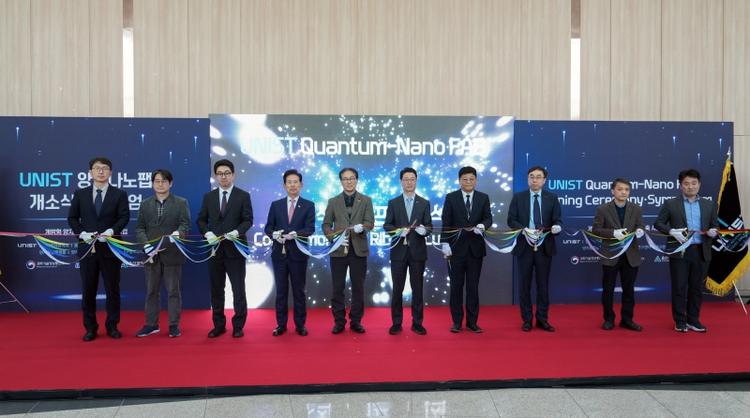
New Quantum-Nano FAB at UNIST to Anchor Korea’s Open Quantum Research Ecosystem

UNIST has officially opened the UNIST Quantum-Nano FAB, a national research facility designed to accelerate quantum device development and strengthen South Korea's competitiveness in quantum technologies. The new infrastructure provides an integrated environment where researchers can design, fabricate, analyze, and validate quantum devices within a single facility, enabling the full lifecycle of quantum device research—from initial concept to experimental demonstration. Supported by the Ministry of Science and ICT (MSIT) and the Institute of Information & Communications Technology Planning & Evaluation (IITP), the facility represents a KRW 30 billion national investment in next-generation quantum research infrastructure. Furthermore, the facility integrates advanced nanofabrication equipment and analytical systems specifically optimized for quantum materials and devices. By bringing these capabilities together in one place, UNIST aims to provide researchers with a streamlined end-to-end research environment that supports rapid experimentation and collaboration. Approximately 80 distinguished guests attended the event, including President Jinbae Hong of IITP and Vice Mayor Hyo-Dae Ahn for Economic Affairs of Ulsan Metropolitan City. The UNIST Quantum-Nano FAB expands upon the university's long-standing open-access nano-fab infrastructure, which has been operated for more than 18 years. The existing platform supports collaborative research for over 60 universities, research institutes, and companies across Korea, handling approximately 33,000 fabrication processes each year and serving approximately 800 trained users annually. Supported by world-class analytical facilities and a team of more than 30 technical specialists, the platform has become a key hub for shared semiconductor and nanotechnology research in Korea. The addition of process equipment optimized for quantum device fabrication and dedicated support systems now extends these capabilities into the rapidly emerging field of quantum devices. President Jinbae Hong of IITP delivered a congratulatory remark at the opening ceremony of UNIST Quantum-Nano FAB on March 13, 2026. The launch of this facility also aligns with a broader regional vision to expand Ulsan's role in advanced technology industries. Known historically for its leadership in automotive, shipbuilding, and petrochemical manufacturing, Ulsan has been working to diversify into future technology sectors. Through initiatives such as the establishment of a Graduate School of Semiconductors Materials and Devices Engineering and the expansion of nanofabrication infrastructure, UNIST is helping position the region as a next-generation innovation hub linking quantum technology and semiconductor industries. UNIST outlined three guiding principles for operating the new facility: △ One-Stop—enabling researchers to carry out design, fabrication, and analysis within a single integrated facility. △ Open Access—providing shared research infrastructure available to universities, research institutes, and industry partners nationwide. △ Vision—supporting the long-term transition of Ulsan's industrial base toward advanced technologies, such as quantum computing and semiconductors. President Chong Rae Park described the initiative as an important milestone for the nation’s quantum research ecosystem. "This KRW 30 billion investment represents more than the construction of a new facility—it marks a significant step toward strengthening Korea’s capabilities in quantum technologies," said President Park. "We aim to develop the UNIST Quantum-Nano FAB into a core platform for a growing quantum ecosystem beginning here in Ulsan, where research breakthroughs can translate into technological advancement and industrial innovation." President Chong Rae Park delivered a welcome remark at the opening ceremony of UNIST Quantum-Nano FAB on March 13, 2026. Professor Il-Sug Chung (Department of Physics, UNIST), who led the open-access quantum infra development initiative, emphasized the importance of open-access and collaboration. "The UNIST Quantum Nano-Fab is designed as an open-access facility where researchers can freely utilize advanced fabrication and analysis equipment," said Professor Chung. "We expect it to serve as a collaborative hub connecting academia, industry, and research institutes while advancing quantum device development in Korea." The opening ceremony was accompanied by the UNIST Quantum-Nano FAB Inaugural Symposium, where leading researchers discussed emerging directions in quantum technologies. Speakers included Dr. Young Ho Lee, Director of the Center for Supercomputing Quantum Computing System at the Korea Research Institute of Standards and Science (KRISS) and Professor Jehyung Kim from the Department of Physics at UNIST. Approximately 80 distinguished guests attended the event, including President Jinbae Hong of IITP and Vice Mayor Hyo-Dae Ahn for Economic Affairs of Ulsan Metropolitan City. Participants also toured the fabrication facility, gaining a firsthand look at the equipment and research environment that will support next-generation quantum device development. The UNIST Quantum-Nano FAB Inaugural Symposium took place on March 13, 2026.

원자력공학과, ‘원자력 안전규제라운드테이블’ 개최

News 2026년 03월 12일 목요일

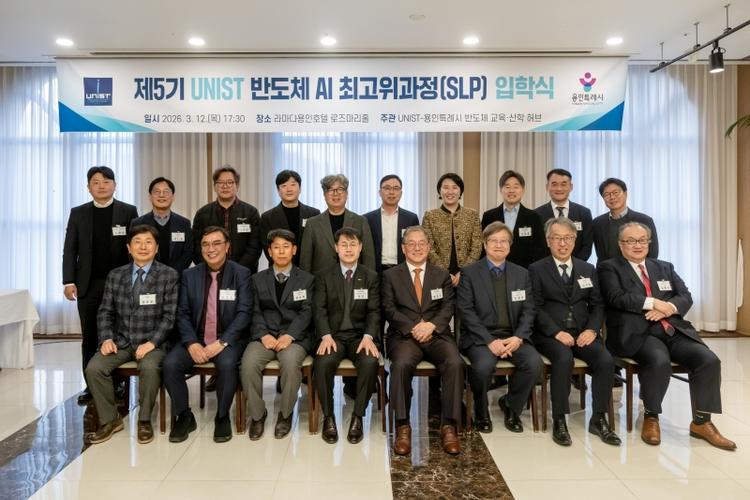
UNIST Launches Fifth Cohort of Semiconductor AI Leadership Program

UNIST has launched the fifth cohort of its Semiconductor AI Leadership Program, an executive education initiative designed to equip industry professionals with advanced AI capabilities for the semiconductor materials, components, and equipment sectors. On March 12, the UNIST Graduate School of Semiconductor Materials and Devices Engineering held the matriculation, attended by approximately 30 participants, including incoming students, alumni representatives, and distinguished guests. Among them were Dean Yong Hwan Kim of the College of Engineering at UNIST, and Jun-ki Hwang, Second Vice Mayor of Yongin Special City, who joined in marking the start of the new cohort. Established in 2023 as part of a strategic partnership between UNIST and Yongin Special City, the program supports the development of a semiconductor education and industry–academia collaboration hub, providing a structured platform for executives and researchers to integrate AI into semiconductor technologies and industrial practice. The fifth cohort includes 10 participants from semiconductor-related companies and research institutions, including TCK Co., Ltd., Wonik IPS Co., Ltd., H Global Co., Ltd., and Sinsung ENG Co., Ltd. The 14-week program will run through June, with weekly sessions held at the 'UNIST–Yongin Hub for Semiconductor Education and Industry Collaboration,' located within the Yongin City Hall. Since its inception, the program has established collaborative ties with approximately 32 companies in the semiconductor materials, components, and equipment sectors. Building on this foundation, UNIST plans to further expand industry–academia research partnerships in collaboration with Yongin Special City.

원자력공학과, ‘원자력 안전규제라운드테이블’ 개최

Research 2026년 01월 22일 목요일

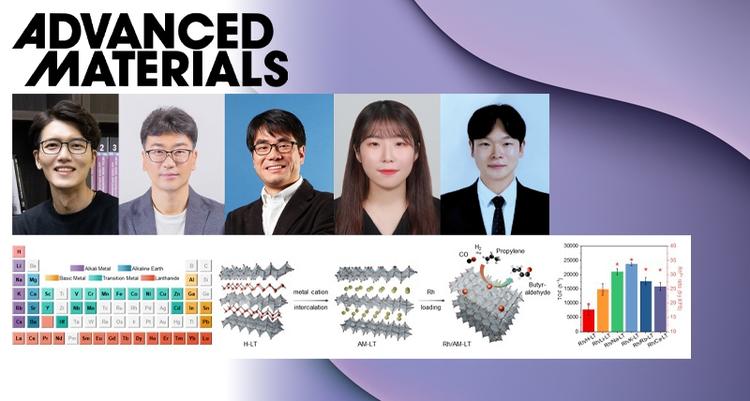
New Study Unveils the Art of Custom-Intercalating 42 Metals into Layered Titanates

Abstract Layered titanates (LTs) offer exceptional structural and chemical tunability, enabling precise modulation of their electronic states and catalytic properties. However, systematic studies on the range of cations that can serve as intercalants for LTs remain limited, and conventional synthesis methods often require additional treatments for cation intercaltion. In this study, we present a cation-free H+ (H3O+)-intercalated LT as a versatile platform for direct cation insertion. This LT can be intercalated with single metal cations (42 metals from five groups) or a combination of 5-30 cations without structural deformation. Intercalation with alkali metals (AMs) precisely tuned the charge density of Rh species when the prepared LTs are used as catalytic supports. Among the Rh-loaded AM-bearing LTs, Rh/K-LT delivered the highest turnover frequency (23 685 h-1), surpassing those of other AM-intercalated systems and previously reported Rh-based heterogeneous catalysts, during propylene hydroformylation. Combined in situ/ex situ analyses and density functional theory calculations revealed that AM intercalation promotes charge transfer to Rh, thereby enhancing adsorption behavior and catalytic activity. This work establishes not only a broad cation intercalation library but also a generalizable strategy for cation engineering in LTs, highlighting the potential of intercalation-driven charge modulation for rational catalyst design across diverse reactions. A research team, affiliated with UNIST has reported a novel synthesis strategy that enables the direct intercalation of a wide range of metal cations into the interlayer spaces of layered titanate (LT) structures. This approach opens new possibilities for designing highly tailored catalysts and energy storage materials for specific industrial applications. Professors Seungho Cho (Department of Materials Science and Engineering), Kwangjin An (School of Energy and Chemical Engineering), and Hu Young Jeong (Graduate School of Semiconductor Materials and Devices Engineering) at UNIST, in collaboration with Professor Jeong Woo Han from Seoul National University, announced this advancement. Their method allows for the one-step synthesis of a flexible, H+-intercalated LT (called H-LT), which can undergo direct ion-exchange to incorporate a wide range of metal cations—from alkali metals (AMs) to lanthanides—without compromising structural integrity. LTs are titanium oxide-based materials composed of thin, stacked layers. Their ability to host various metal ions has made them attractive as catalyst supports and electrode materials. However, traditional metal incorporation methods often involve high-temperature processing and harsh chemicals, limiting the types of metals that can be used and complicating large-scale production. Figure 1. Preparation and characterization of LT and the M-LTs. To address these challenges, the team developed a bottom-up approach using ammonium hydroxide. Precursor materials naturally organize into proton-rich LTs, which can then exchange protons for desired metal ions when immersed in solution. This technique can intercalate up to 42 different metals across five groups—including AMs and rare earth elements—and can even incorporate over 30 different metals simultaneously in a single structure. The team demonstrated the practical potential by creating a rhodium(Rh)-supported catalyst. When tested for hydroformylation of propylene—a key step in plastics and detergent production—the catalyst supported on potassium-intercalated LT showed more than three times the activity of conventional Rh catalysts. Analyses and computational modeling suggested that the intercalated AMs facilitate charge transfer to Rh, improving adsorption and catalytic efficiency. This work provides more than synthesizing new materials. Rather it offers a comprehensive platform—an intercalation library—that can be tailored for various catalytic and energy applications. "Our work goes beyond just synthesizing a new material," said Professor Cho. "It is about establishing a flexible, scalable technology for selecting and combining metals, opening up new avenues for cost-effective catalysts and high-performance energy storage." The research involved contributions from Hyoseok Kim (Department of Materials Science and Engineering, UNIST), Daewon Oh (School of Energy and Chemical Engineering, UNIST), and Miyeon Kim (Department of Materials Science and Engineering, SNU), as first authors. Their findings have been published in the online version of Advanced Materials on December 26, 2025. The study has been supported by the Ministry of Science and ICT (MSIT), the National Research Foundation of Korea (NRF), the UNIST InnoCORE program, the Korea Institute for Advancement of Technology (KIAT), the Ulsan RISE Center, and the Korea Basic Science Institute. Journal Reference Hyoseok Kim, Daewon Oh, Miyeon Kim, et al., "Diverse Cation Exchange in Layered Titanate Nanostructures for Tailored Catalysis," Adv. Mater., (2025).

원자력공학과, ‘원자력 안전규제라운드테이블’ 개최

Research 2025년 12월 16일 화요일

Revolutionary Method Enables Rapid, Eco-Friendly Production of Multi-Metal Nanostructures Using CO2

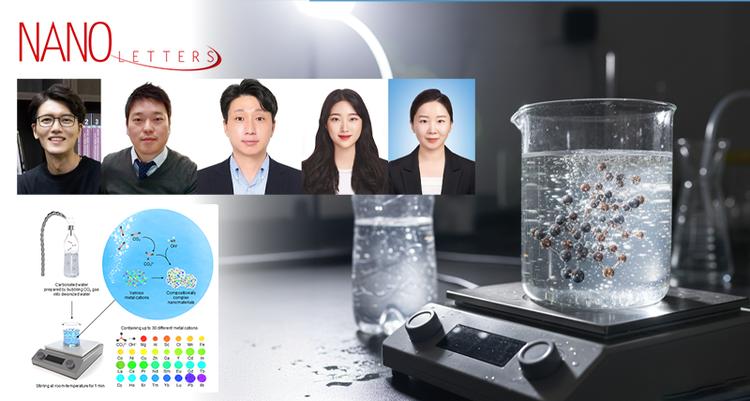
Abstract Multielement nanostructures promise unusual properties but are constrained by crystalline frameworks limiting incorporable cations, and prevailing syntheses rely on harsh conditions restricting practicality. Here we introduce a CO2-enabled, room-temperature route to nanostructures containing up to 30 different metal cations by coengineering cation and anion arrangements in layered-double-hydroxide-derived frameworks. The key principle is anion–cation arrangement control: CO2-derived carbonate acts as a programmable bridging anion that, with larger-radius and higher-valent cations, drives structural reconstruction, suppresses long-range order, and relaxes radius-ratio constraints. This reorganization yields uniform cation mixing, tunable M3+/M2+ balance, and direct metal–carbonate linkages, producing ultrahigh configurational and positional disorder. The synthesis proceeds under ambient conditions in carbonated water, enabling compositional tunability, equimolar incorporation across 30 elements, and scalable, ecofriendly processing that valorizes a greenhouse gas. Leveraging anion–cation coarrangement to expand the composition space offers a general strategy for designing multielement nanomaterials with enhanced functional freedom. A team of researchers at UNIST, in collaboration with the University of Cologne and Purdue University, has unveiled a rapid, sustainable method to create complex nanomaterials containing up to 30 different metals in just one minute at room temperature. By utilizing carbon dioxide (CO₂)—commonly known as a greenhouse gas—this innovative process provides an eco-friendly way to produce advanced materials with a wide range of technological applications. Professors Seungho Cho and Sukbin Lee from the Department of Materials Science and Engineering, along with Professor Junghwan Kim from the Graduate School of Semiconductor Materials and Devices Engineering, led the demonstration of this method to synthesize high-entropy nanostructures—materials composed of multi metals that offer enhanced durability and catalytic activity. These properties make them highly promising for use in batteries, semiconductors, and other advanced technologies. Traditionally, making such multi-metal materials required extremely high temperatures and pressures, which increased production costs and limited scalability. This new approach, however, turns CO₂ dissolved in water into a natural bridge that facilitates the uniform mixing of different metals under ambient conditions. The process involves bubbling CO₂ into water to produce carbonic acid, which then releases carbonate ions (CO₃²⁻). When hydroxide ions are added, these carbonate ions easily connect with various metal ions—ranging from rare earth elements like neodymium to transition metals like copper and iron—forming nanometer-sized metal carbonate particles in just one minute of stirring. Figure 1. Schematic of the greenhouse-gas-driven, energy-efficient route for synthesizing compositionally complex nanomaterials. This method allows for the creation of complex nanomaterials that, according to traditional principles, would be difficult to combine due to differences in atomic size and other factors. Microscopic analysis revealed that these materials have a highly disordered, non-crystalline structure, which could improve their performance in catalytic and energy storage applications. Professor Sukbin Lee explained, "The disordered structures produced by this method could be beneficial for catalytic reactions and energy storage. We plan to explore various combinations of metals, including catalysts for hydrogen production and battery electrodes." Professor Seungho Cho highlighted the environmental benefits, stating, "Creating multi-metal nanomaterials at room temperature cuts costs and reduces CO₂ emissions." He further noted, "Our ultimate goal is to develop a flexible, cost-effective process for making a wide range of materials without restrictions on composition—contributing to both technological progress and environmental sustainability." This collaborative research involved Professor Sanjay Mathur at the University of Cologne, Germany, and Professor Haiyan Wang at Purdue University. Key contributions were made by UNIST researchers Miri Kim and Dr. Min-Ji Kim from the Department of Materials Science and Engineering at UNIST, along with Yizhi Zhang from Purdue University, who served as the study's first author. The findings of this research were published online in Nano Letters on November 21, 2025. The study has been supported by the National Research Foundation (NRF) of Korea, the Ministry of Science and ICT (MSIT), UNIST InnoCORE program, the Korea Planning & Evaluation of Industrial Technology (KEIT), and the Electronics and Telecommunications Research Institute (ETRI). Journal Reference Miri Kim, Min-Ji Kim, Yizhi Zhang, et al., "Greenhouse-Gas-Driven Room-Temperature Synthesis of Compositionally Complex Nanomaterials via Anion–Cation Arrangement Control," (2025).

원자력공학과, ‘원자력 안전규제라운드테이블’ 개최

News 2025년 12월 14일 일요일

UNIST Featured in Nature Branded Content on AI-Driven Clean Energy Innovation

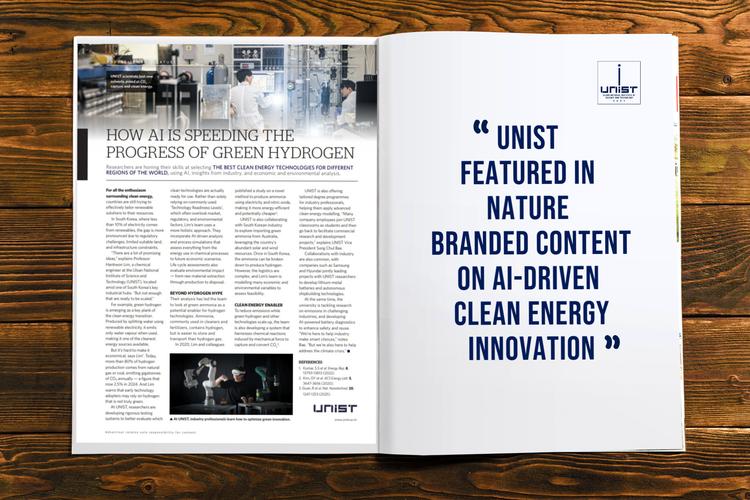
UNIST is featured in a branded content article published on Nature, in collaboration with Springer Nature, highlighting its research strengths in green hydrogen, AI-driven energy modeling, and industry-based innovation. Titled "How AI Is Speeding the Process of Green Hydrogen," the article explores how UNIST researchers are applying AI, economic modeling, and real-world data to accelerate the deployment of scalable clean-energy technologies. At the core of the article is the work of Professor Hankwon Lim from the UNIST Graduate School of Carbon Neutrality, whose team evaluates clean-energy pathways from a holistic perspective. Moving beyond traditional 'Technology Readiness Levels,' which often overlook market, regulatory, and environmental dimensions, his group integrates AI simulations, process and energy modeling, and life-cycle analysis to assess which solutions—such as green hydrogen or green ammonia—are most viable for large-scale, region-specific adoption. The article also highlights UNIST's collaboration with industry to advance practical clean-energy solutions. Current initiatives include modeling supply chains for importing and converting green ammonia, developing mechanochemistry-based systems for CO₂ capture, and conducting joint research with partners such as Samsung and Hyundai. In addition, the feature introduces UNIST’s tailored degree programs designed for industry professionals, supporting companies in applying advanced energy modeling to real-world R&D challenges. "Many company employees join UNIST classrooms as students and return to industry ready to lead innovation," said UNIST Vice President Sung Chul Bae, emphasizing UNIST's role in supporting Korea's industrial transition. This collaboration with Springer Nature reflects UNIST's broader commitment to driving a sustainable energy future through research excellence, technology validation, and strong industry partnerships. 《Editor’s Note: Portions of this article are adapted from the branded content article "How AI Is Speeding the Progress of Green Hydrogen," published on Nature in collaboration with Springer Nature on December 11, 2025.》 Explore the full branded content article on Nature to learn more about UNIST's work at the forefront of clean-energy innovation.

원자력공학과, ‘원자력 안전규제라운드테이블’ 개최

Research 2025년 12월 01일 월요일

Breakthrough in 2D Semiconductor Materials Paves the Way for Next-Gene Ultra-Scaled Chips

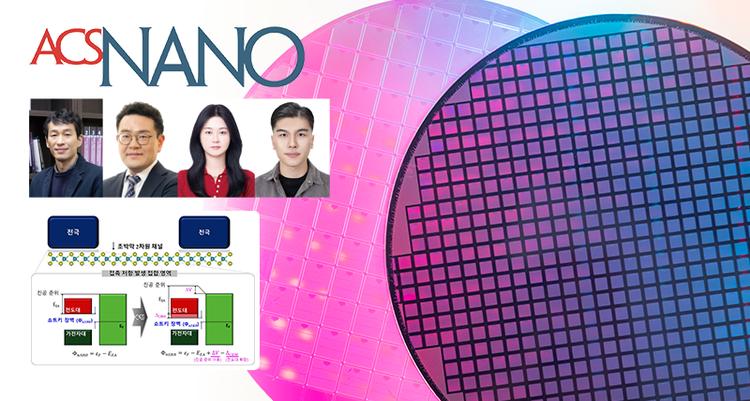
Abstract The demand for low contact resistance in two-dimensional (2D) nanoelectronics has positioned semimetals as ideal contact materials, owing to their ability to minimize the formation of metal-induced gap states (MIGS). While the contact physics of Dirac semimetals is well understood, type-II Weyl (i.e., Weyl-II) semimetals remain largely unexplored, despite their unique potential for achieving defect-free nanoscale devices. Here, using density functional theory (DFT), we elucidate the interfacial physics of MoS2–Weyl-II semimetal junctions and conduct a comparative analysis with Dirac semimetals. Crucially, we identify a downward extension of the conduction band minimum (CBM) in MoS2, originating from contact-induced interfacial states. This phenomenon is closely tied to the rectangular Brillouin zone of Weyl-II semimetals, which─unlike the 3-fold symmetry of MoS2 and Dirac semimetals─renders orbital hybridization in MoS2–Weyl-II systems highly sensitive to contact angles. By introducing a modified Schottky-Mott rule that accounts for vacuum level shifts, CBM extensions, and orbital interactions, we significantly improve conventional Schottky barrier height predictions. This approach effectively resolves longstanding theoretical-experimental discrepancies, providing a robust framework to properly design and optimize 2D contacts in next-generation logic devices. A research team, affiliated with UNIST has made a significant breakthrough in overcoming one of the most persistent challenges hindering the commercialization of two-dimensional (2D) semiconductor materials—contact resistance. Their findings shed light on the longstanding discrepancy between theoretical models and experimental results concerning the energy barriers that impede electron flow at contact interfaces, paving the way for more accurate performance predictions and faster development of ultra-scaled 2D semiconductor chips. Led by Professors Changwook Jeong and Soon-Yong Kwon from the Graduate School of Semiconductor Materials and Devices Engineering at UNIST, the team identified the root cause behind the mismatch between existing theoretical models and experimental results concerning the energy barriers formed at the interface between 2D semiconductors and semi-metallic materials, known as bialkali metals. They also proposed a new predictive formula that more accurately reflects the complex physics at play in these interfaces. As the semiconductor industry moves toward chips with feature sizes below ten nanometers, 2D materials have garnered increasing attention as promising alternatives to silicon, thanks to their atomic-scale thickness and exceptional electronic properties. However, integrating these materials with conventional metallic electrodes often results in high contact resistance, primarily due to the Schottky barrier—a potential energy obstacle that electrons must overcome to transition from metal to semiconductor. While bialkali metals have been experimentally regarded as promising candidates for reducing these barriers, their reliability has been questioned. Conventional theoretical calculations tend to predict higher energy barriers than what is observed in practice, leading to uncertainty about their practical viability. Figure 1. Schematic image illustrating the overall study of the research. The research revealed that this inconsistency originates from a phenomenon called, Conduction Band Extension within molybdenum disulfide (MoS₂), a representative 2D semiconductor. When the metal contact approaches the semiconductor at specific angles, the conduction pathways within the material expand, effectively lowering the energy barrier and facilitating electron movement across the interface. Building on this insight, the team developed an improved predictive formula that incorporates both the conduction band extension effect and the often-overlooked Vacuum Level Shift—a minor yet impactful factor that can significantly influence the barrier height in ultrathin 2D materials. This revised model successfully reproduces experimental results that previously defied explanation by traditional approaches such as the Schottky-Mott rule, thereby providing a more reliable theoretical framework for interface physics in 2D nanoelectronics. Professor Jeong remarked, "Our findings fundamentally clarify the mechanisms behind energy barrier formation at the interfaces of 2D semiconductors and semi-metals, which traditional theories failed to explain. By establishing a more accurate and comprehensive model, we can more efficiently identify optimal material combinations and device architectures, ultimately accelerating the development of next-generation semiconductor technologies." The findings of this research have been published in ACS Nano on November 4, 2025. Journal Reference Juwon Han, Hyeonwoo Lee, Youseung Lee, et al., "Contact Physics in 2D Nanoelectronics: Comparative Study of Type-II Weyl and Dirac Semimetals," ACS Nano, (2025).

원자력공학과, ‘원자력 안전규제라운드테이블’ 개최

News 2025년 11월 20일 목요일

Nine UNIST Researchers Named Among the World's Most Highly Cited Researchers for 2025

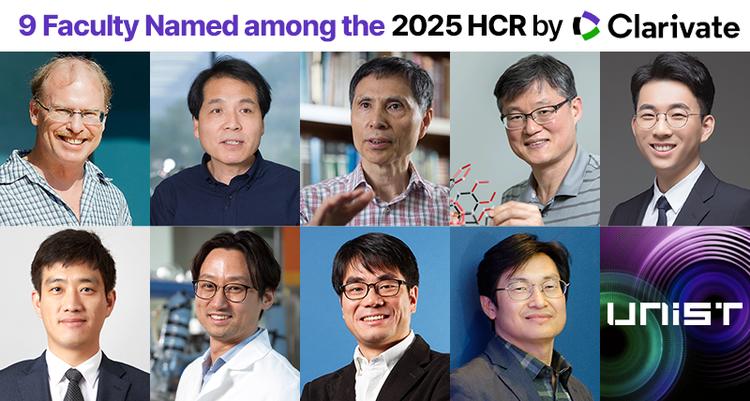
Nine faculty members from UNIST have been named to the prestigious Highly Cited Researchers (HCR) 2025 list, compiled by Clarivate Analytics—an increase of two from 2024—positioning UNIST as South Korea's second-highest-ranked institution, following Seoul National University. The 2025 list recognizes 6,868 researchers from 60 countries and regions, identified through an extensive analysis of publications indexed in the Web of Science Core Collection from 2014 to 2024. To be selected, individuals must have authored papers that rank among the top 1% by citations within their respective fields over an 11-year period, while also demonstrating sustained research integrity and significant scholarly impact. This year, 76 researchers from South Korea have been awarded Highly Cited Researchers 2025 designations, with UNIST contributing nine researchers. Seoul National University (SNU) secured the highest number of HCRs, followed by UNIST and Sungkyunkwan University (SKKU). This recognition underscores UNIST's commitment to advancing cutting-edge research and fostering innovation across diverse scientific disciplines. The university continues to strengthen its position as a hub for influential research and groundbreaking discoveries, driven by the dedication and expertise of its faculty members. The UNIST researchers who made the list this year are: △ Distinguished Professor Rodney S. Ruoff, △ Invited Distinguished Professor Sang Il Seok, △ Research Professor Kwang Soo Kim, △ Distinguished Professor Jong-Beom Baek, △ Professor Hyun-Wook Lee, △ Professor Seung Woo Cho, △ Professor Changduk Yang, △ Professor Hu Young Jeong, and △ Professor Tae Joo Shin. Notably, Distinguished Professor Rodney S. Ruoff has been listed for 12 consecutive years—the longest streak among UNIST faculty—since the inception of the HCR ranking in 2014. His recognition reflects his global impact across materials science, chemistry, and physics, now extending into the cross-field category. Invited Distinguished Professor Sang Il Seok and Research Professor Kwang Soo Kim have maintained their inclusion for eight consecutive years, underscoring their sustained research excellence. Distinguished Professor Seok is internationally recognized for his pioneering work on perovskite solar cells (PSCs), while Research Professor Kim is a leading expert in machine-learning and quantum-based new material design. Distinguished Professor Jong-Beom Baek is a global authority on graphene and two-dimensional (2D) materials, previously earned six consecutive years of recognition (2018-2023). Specializing in real-time transmission electron microscopy (TEM) for batteries, Professor Hyun-Wook Lee has been selected for seven consecutive years, including six years in the cross-field category, for his contributions to high-resolution in-situ materials characterization. Professor Hu Young Jeong has been named to the list for five years in the cross-field category for his contributions to advanced electron microscopy techniques. Professor Changduk Yang continues his streak with five years of recognition for his work on next-generation solar cells, while Professor Seung Woo Cho is listed for impactful contributions to CRISPER-based gene editing and biotechnology. Professor Tae Joo Shin, newly selected in 2025, is recognized for his expertise in synchrotron radiation-based structural analysis and advanced scattering methodologies for novel materials. UNIST President Chong Rae Park commented, "Breakthrough research stems from the dedication of pioneering researchers and the research-centric environment we foster at UNIST," adding "We will continue to build an ecosystem that supports our researchers’ pursuit of innovative, high-impact studies." Among Korean universities, SNU leads with 16 HCRs on the list, followed by UNIST with 9, and SKKU with 7. Internationally, the top countries are the United States with 2,670 HCRs, China with 1,406, the United Kingdom with 570, Germany with 363, and Australia with 312. Leading institutions include the Chinese Academy of Sciences (258), Harvard University (170), Stanford University (141), and Tsinghua University (91). The full list of HCR 2025, along with detailed analysis and selection criteria, can be accessed on Clarivate's official website: [https://clarivate.com/highly-cited-researchers](https://clarivate.com/highly-cited-researchers].

원자력공학과, ‘원자력 안전규제라운드테이블’ 개최

Research 2025년 11월 12일 수요일

UNIST Researchers Uncover Causes of Overestimated Semiconductor Performance Metrics

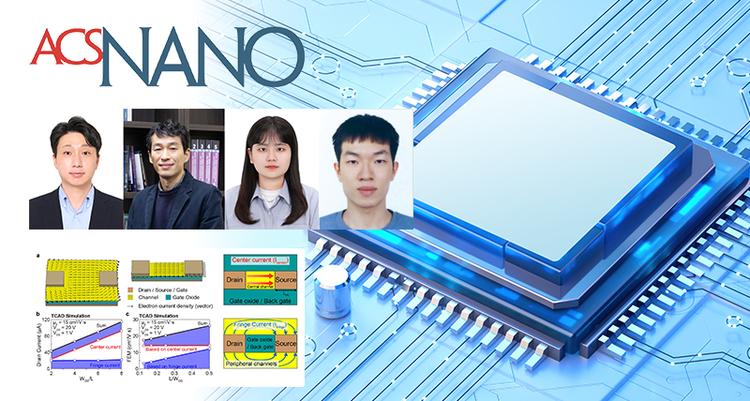
Abstract Amorphous oxide semiconductor-based thin-film transistors (oxide TFTs) were first demonstrated in 2004. These devices offer numerous advantages, including low-temperature processing, high carrier mobility, and ultralow off-current. As a result, oxide TFTs have already been adopted for backplane technologies in modern flat-panel displays. Furthermore, their ultralow off-current has attracted considerable attention for next-generation DRAM applications. However, device reliability remains a critical challenge. In particular, gate bias stress instabilities such as negative bias temperature stress and positive bias temperature stress significantly hinder the advancement of high-mobility oxide TFTs beyond low-temperature polycrystalline silicon (LTPS) technology. Therefore, the evaluation of both field-effect mobility (FEM) and bias stability is essential for oxide TFTs. The absolute value of FEM is especially important when identifying candidate materials to replace LTPS. In this context, we have recently found that incorrect FEM evaluation methods have been widely used in numerous published studies. Such errors have resulted in overestimated FEM values, potentially compromising objective comparisons of materials and fabrication processes. This study clearly demonstrates, through both experimental data and simulation-analytical modeling, how and why FEM overestimation occurs. In particular, we derive a compact analytical expression based on conformal mapping and validate it using TCAD simulations and measurements. This dual-pronged approach establishes a general framework for identifying and correcting mobility overestimation. This study highlights the importance of recognizing and addressing mobility overestimation within the field, and that the proposed FEM evaluation method should be adopted to enable more objective and reliable comparisons. A research team affiliated with UNIST has uncovered a critical flaw in the performance evaluation metrics that have long guided researchers in semiconductor development. This discovery raises concerns that the commonly used measurement may overstate device capabilities. Jointly led by Professors Junghwan Kim and Changwook Jeong in the Graduate School of Semiconductor Materials and Devices Engineering at UNIST, the team identified how the widely used metric, field-effect mobility (FEM), can be exaggerated by up to 30 times depending on the device structure, and proposed standardized design guidelines to address this issue. FEM is a key indicator used to measure how quickly and efficiently charge carriers move within a semiconductor. A higher FEM value generally correlates with faster device operation and lower power consumption, making it a crucial parameter in the development of high-performance semiconductor chips. The researchers found that FEM measurements can be significantly overestimated in oxide thin-film transistors (TFTs)—a common semiconductor device—due to the device’s geometric structure. Specifically, they pinpointed fringe current caused by electrode geometry as the main culprit. Figure 1. TFT characteristics of IGZO TFTs with different channel/electrode configurations. (a,b) Optical microscopy (OM) images of devices with WCH > WDS and WCH < WDS. (c,e) Transfer characteristics and (d,f) field-effect mobility (FEM) as a function of L/W ratio for each configuration. (g,h) Comparison of FEM between the two configurations. In a typical TFT, current flows from the source electrode through a channel to the drain electrode. When the channel width exceeds the electrode width, fringe currents—currents that flow outside the main channel region into the surrounding areas—can form. Since measurement equipment sums all currents, including these fringe currents, the resulting FEM appears artificially inflated. This is akin to measuring an average vehicle speed on a highway while including cars veering into the shoulder lanes, giving a misleading impression of overall traffic speed. To address this, the team established new design standards for TFTs. They recommend designing the channel width to be narrower than the electrode width or, if unavoidable, ensuring that the electrode width exceeds the device length (L) by at least 12 times—that is, L/W ≤ 1/12. By adhering to these guidelines, the influence of fringe current can be minimized, enabling accurate FEM measurements that truly reflect device performance. Both experimental data and simulations confirmed that following these standards eliminates the overestimation, allowing for precise comparisons of materials and device structures. Furthermore, the team recommends measuring the hall mobility, alongside FEM. Hall mobility assesses the intrinsic electrical properties of the semiconductor material itself, independent of device geometry, providing an additional layer of verification free from structural errors. Professor Kim emphasized, "Measurement inaccuracies that overstate device performance can lead to misjudging promising materials or hinder objective comparisons, ultimately impeding progress in the semiconductor industry. Presenting a global standard for accurate FEM evaluation is a meaningful step toward more reliable research." The findings were published in ACS Nano on October 21, 2025. The research was supported by the National Research Foundation of Korea (NRF), the Ministry of Science and ICT (MSIT), and the Ministry of Trade, Industry, and Energy (MOTIE). Journal Reference Soohyun Kim, Youngjoon Lee, Seokyeon Shin, et al., "Mobility Overestimation in Thin-Film Transistors: Effects of Device Geometry and Fringe Currents," ACS Nano, (2025).

반도체 소재·부품 대학원

반도체 소재ㆍ부품 대학원 학사일정
확인해 보세요.

View More